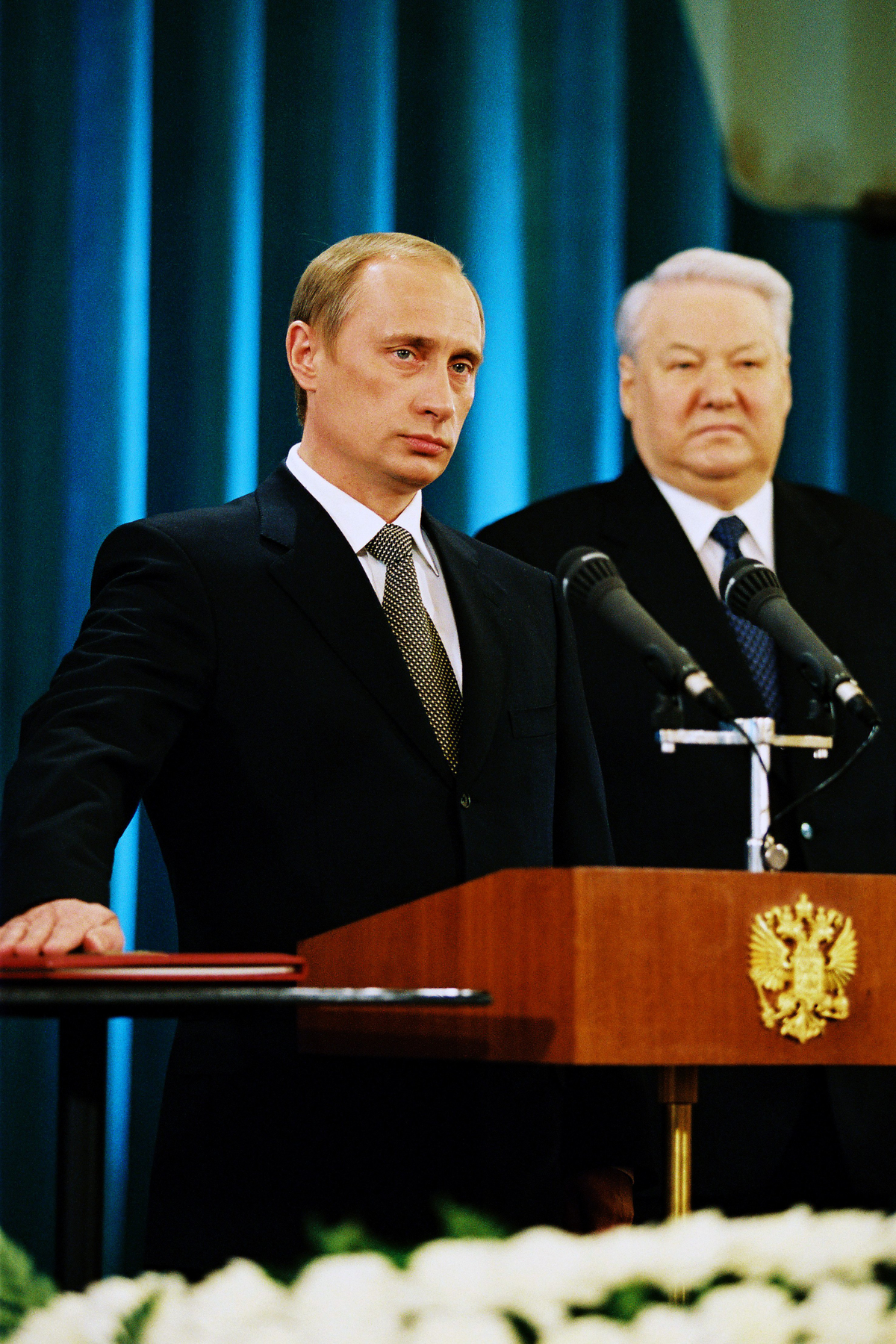
Vladimir Putin's First Presidency in Russia
Russia

Political
Global Trade
4 min read
Updated By: History Editorial Network (HEN)
Published:
In May 2000, Vladimir Putin was elected as President of Russia for the first time. Putin, a former KGB officer, had previously served as Prime Minister under President Boris Yeltsin. His election marked a shift in Russian politics, with many seeing him as a strong leader who would bring stability to the country.
Putin's presidency was characterized by a centralization of power, as he implemented various reforms to strengthen the Russian government. Under his leadership, Russia experienced economic growth and an increase in its international influence.
Internationally, Putin's presidency was marked by tension with the West, particularly the United States. His assertive foreign policy stances, such as the annexation of Crimea in 2014, strained relations between Russia and Western countries.
Domestically, Putin's presidency saw a crackdown on political dissent and media independence. Critics accused him of undermining democracy in Russia by limiting political opposition and freedom of speech.
Despite these criticisms, Putin remained popular among many Russians, who saw him as a symbol of Russian strength and pride. His tough stance on issues like terrorism and corruption resonated with the Russian public.
Overall, Putin's election as President of Russia in 2000 was a significant moment in Russian history. It marked the beginning of his long and influential presidency, which would shape Russia's domestic and foreign policies for years to come.
#VladimirPutin #Russia #Presidency #PoliticalHistory #ForeignPolicy
Explore the Life Moments of
 AI Twin