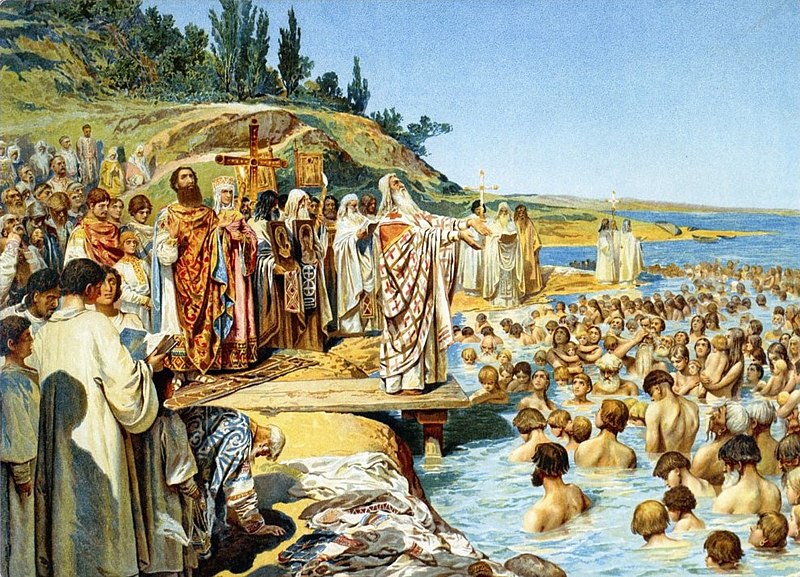
Saint Vladimir the Great introduced Christianity to Russia creating a lasting impact on the country.
Russia

Religion
4 min read
Updated By: History Editorial Network (HEN)
Published:
In 988, Saint Vladimir the Great, the ruler of Kievan Rus', introduced Christianity to Russia. This event marked a significant shift in the religious landscape of the region, as Christianity replaced traditional Slavic pagan beliefs.
Prior to Vladimir's conversion, Kievan Rus' was predominantly pagan, with various gods and rituals shaping the spiritual practices of the people. However, after embracing Christianity, Vladimir initiated a mass baptism in the Dnieper River, symbolizing the country's adoption of the new faith.
The impact of the introduction of Christianity by Saint Vladimir was profound. It led to the establishment of the Eastern Orthodox Church in Russia, which played a crucial role in shaping the country's culture, society, and politics for centuries to come. The Church became a unifying force, providing a sense of identity and solidarity among the diverse population of Kievan Rus'.
Vladimir's decision to convert to Christianity also had diplomatic implications, as it strengthened ties with the Byzantine Empire, from which Orthodox Christianity had been introduced. This alliance proved to be beneficial for both parties, paving the way for cultural exchange, trade, and mutual support.
The conversion of Russia to Christianity under Saint Vladimir can be seen as a pivotal moment in the country's history, ushering in a new era of religious and cultural development. The impact of this event can still be felt today, with Orthodox Christianity remaining a significant aspect of Russian identity.
#SaintVladimir #ChristianizationofRussia #KievanRus' #OrthodoxChurch #CulturalExchange

Explore the Life Moments of
 AI Twin