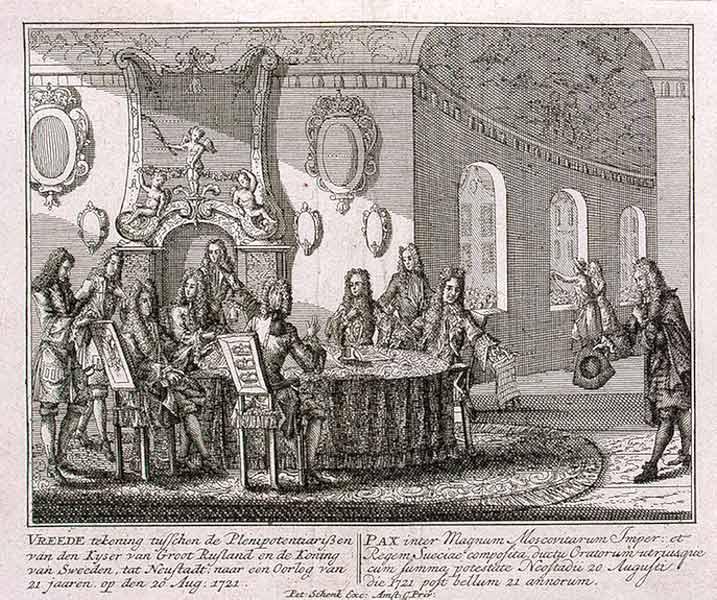
Treaty of Nystad: Access to Black Sea
Russia

Political
4 min read
Updated By: History Editorial Network (HEN)
Published:
After years of conflict, the Treaty of Nystad granted Russia access to the Black Sea, marking a significant shift in power dynamics in the region. The treaty, signed between Russia and Sweden, brought an end to the Great Northern War, securing Russian control over the Baltic Sea and granting access to the Black Sea for the first time in its history.
With the acquisition of territory along the Baltic and Black Seas, Russia emerged as a prominent maritime power in Europe. The Treaty of Nystad solidified Russia's position as a formidable player on the international stage, reshaping geopolitics in the region for years to come.
The treaty not only expanded Russia's access to crucial waterways but also opened up new opportunities for trade and expansion. The Black Sea, in particular, provided Russia with a strategic gateway to the Mediterranean and beyond, enabling the country to strengthen its economic and military capabilities.
As a result of the Treaty of Nystad, Russia gained valuable access to key sea routes and ports, enhancing its influence in global trade and maritime affairs. The treaty's repercussions reverberated across Europe, triggering a realignment of alliances and power structures as other nations reacted to Russia's newfound dominance in the Black Sea region.
The Treaty of Nystad was a pivotal moment in Russian history, marking a crucial milestone in the country's rise to power as a major player in European and global affairs. The treaty's implications would shape Russia's foreign policy and territorial aspirations for generations to come, solidifying its position as a force to be reckoned with on the world stage.
#Russia #BlackSea #TreatyofNystad #Geopolitics #PowerShift #MaritimePower

Explore the Life Moments of
 AI Twin