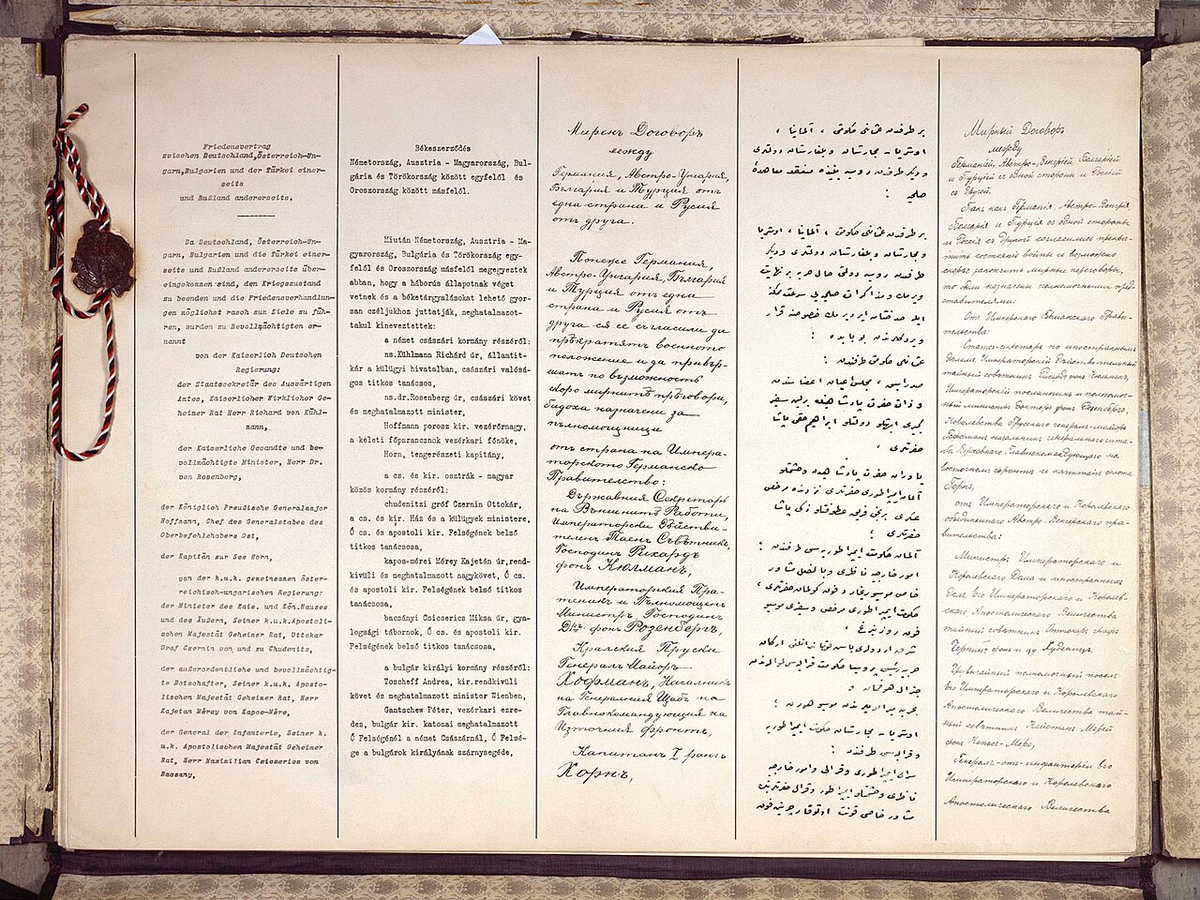
Treaty of Brest-Litovsk ends WWI role
Russia

Political
4 min read
Updated By: History Editorial Network (HEN)
Published:
Amidst the turmoil of World War I, a pivotal agreement altered the course of history. The Treaty of Brest-Litovsk marked the conclusion of Russia's involvement in the conflict. Following the Bolshevik Revolution, the new Soviet government pursued an end to the war, leading to negotiations with the Central Powers.
The treaty, signed in the city of Brest-Litovsk, resulted in significant territorial losses for Russia. Vast regions, including Ukraine, Poland, and the Baltics, were ceded to Germany and its allies. The Russian economy was also severely impacted by reparations imposed by the Central Powers.
The signing of the treaty had far-reaching consequences. On one hand, it allowed the Bolsheviks to consolidate power and focus on internal affairs, solidifying their authority in Russia. On the other hand, it sparked outrage among many Russians and fueled dissent against the new government.
Furthermore, the Treaty of Brest-Litovsk reshaped the geopolitical landscape of Eastern Europe. The territorial changes laid the groundwork for future conflicts and power struggles in the region. The loss of key territories weakened Russia's position on the international stage and altered the balance of power in Europe.
Ultimately, the Treaty of Brest-Litovsk represented a turning point in World War I and Russian history. It signaled the end of Russia’s participation in the global conflict, allowing the country to shift its focus inward and lay the foundations for the Soviet era.
#TreatyofBrestLitovsk #Russia #WorldWarI #BolshevikRevolution #CentralPowers #Geopolitics

Explore the Life Moments of
 AI Twin