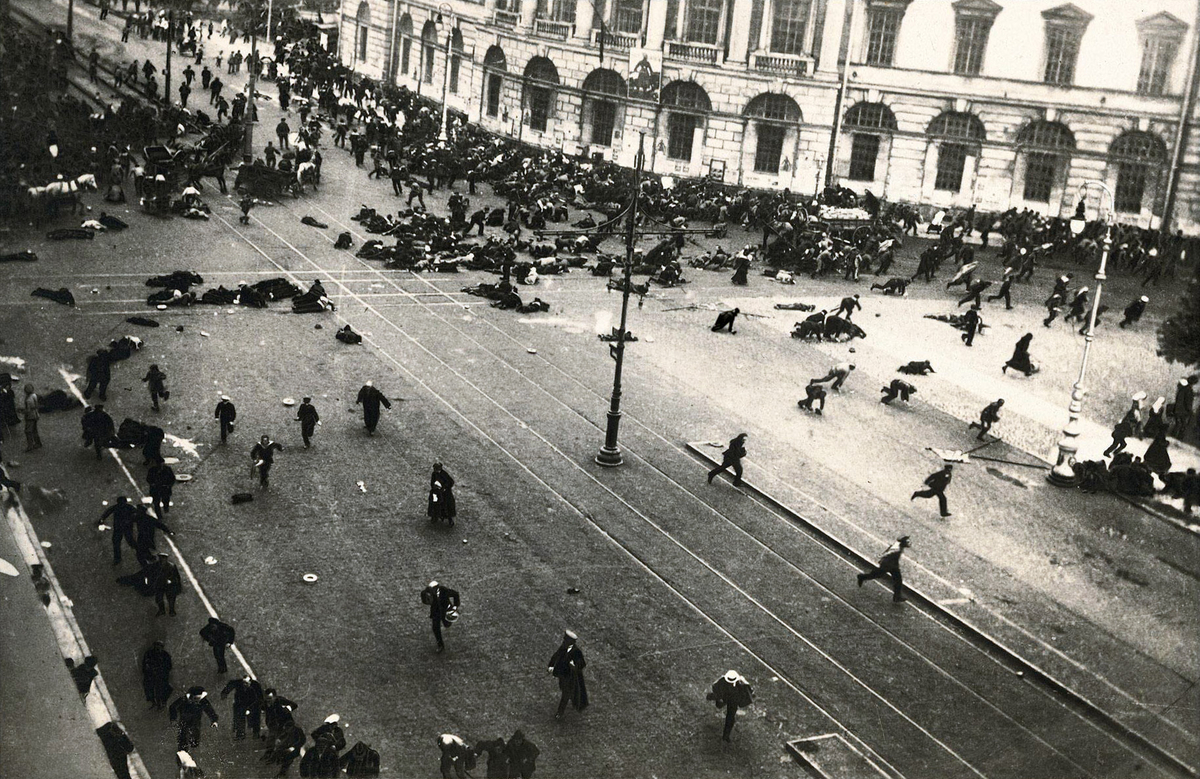
Provisional Government Troops Fire on Petrograd Protesters in 'July Days' Unrest
Russia
Political
4 min read
Updated By: History Editorial Network (HEN)
Published:
In July, following the February Revolution in Russia, the Provisional Government faced growing discontent in Petrograd. Workers and soldiers took to the streets in protest against the government's continuation of the war and its failure to address economic hardships. The demonstrators demanded an end to the war, land reform, and the transfer of power to the soviets.
Tensions escalated when the government attempted to suppress the protests, leading to clashes between the demonstrators and the troops supporting the Provisional Government. The situation worsened when the Bolsheviks called for an armed uprising against the government. The government responded by mobilizing troops and declaring the Bolsheviks as enemies of the state.
The turning point came when government troops, under the orders of Prime Minister Kerensky, fired on the protesters in Petrograd. The violence resulted in numerous casualties and marked a significant escalation in the conflict between the government and the revolutionary forces.
The July Days unrest had far-reaching consequences. It exposed the weaknesses of the Provisional Government and deepened the divide between the government and the radical revolutionary factions. The event also enhanced the Bolsheviks' popularity among the discontented masses, setting the stage for their eventual rise to power.
The aftermath of the July Days saw a crackdown on dissent by the government, with arrests of Bolshevik leaders and the suppression of revolutionary activities. However, the events of July served as a catalyst for the Bolsheviks' growing influence and paved the way for the October Revolution, which ultimately led to the establishment of Soviet rule in Russia.
#RussianRevolution #ProvisionalGovernment #Bolsheviks #PetrogradProtests
Explore the Life Moments of
 AI Twin