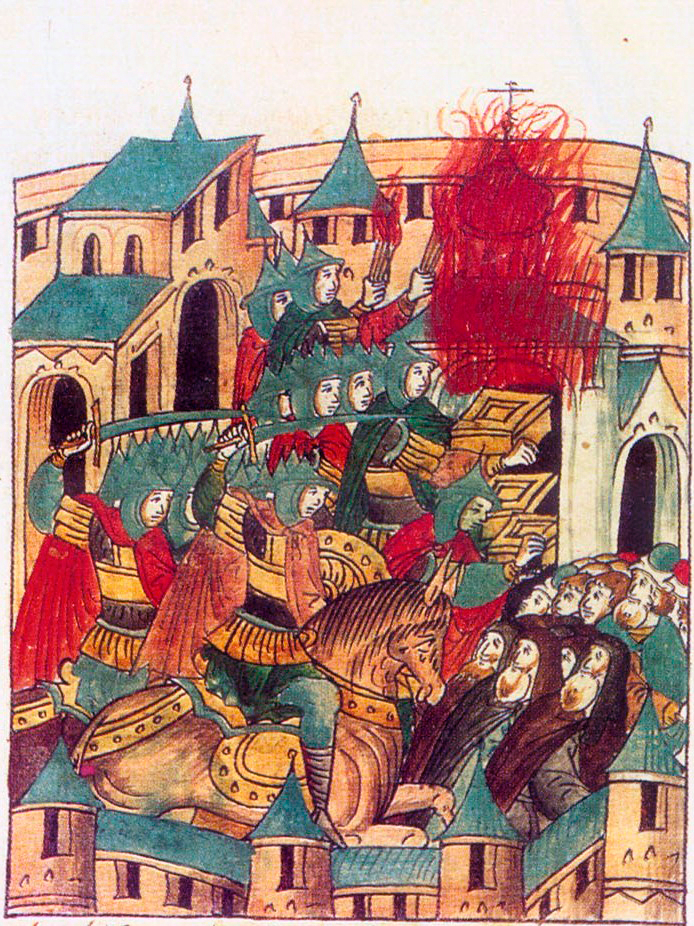
Mongol Invasion: Batu Khan's Conquest of Kiev
Russia

Political
4 min read
Updated By: History Editorial Network (HEN)
Published:
In the 13th century, the Mongol Empire, under the leadership of Batu Khan, launched a brutal invasion into the heart of Russia, culminating in the conquest of Kiev, the capital of the powerful Kievan Rus' state. This marked a significant turning point in Russian history as it led to centuries of Mongol domination over the region.
The Mongol invasion of Russia was preceded by internal strife within the Kievan Rus' state, weakening its defenses and leaving it vulnerable to external threats. Batu Khan saw an opportunity to expand the Mongol Empire's territory and launched a massive military campaign into Russia.
The Mongol forces, known for their superior military tactics and ruthless efficiency, quickly overran Russian cities and towns, leaving a trail of destruction in their wake. Kiev, a major cultural and political center of the region, fell to the Mongols after a brutal siege, marking the end of an era for the Kievan Rus' state.
The impact of the Mongol invasion of Russia was profound and long-lasting. The Mongols established the Golden Horde, a vassal state that controlled vast territories in Eastern Europe, including Russia. The subsequent years saw Russian princes paying tribute to the Mongol khans and adopting Mongol administrative practices, fundamentally altering the political and social landscape of the region.
The conquest of Kiev by Batu Khan and the Mongols reshaped the course of Russian history, paving the way for the rise of the Muscovite state and the eventual emergence of the Russian Empire. The scars of the Mongol invasion would be felt for generations to come, leaving a lasting imprint on the development of Russian civilization.
#MongolInvasion #BatuKhan #ConquestofKiev #GoldenHorde #RussianHistory

Explore the Life Moments of
 AI Twin