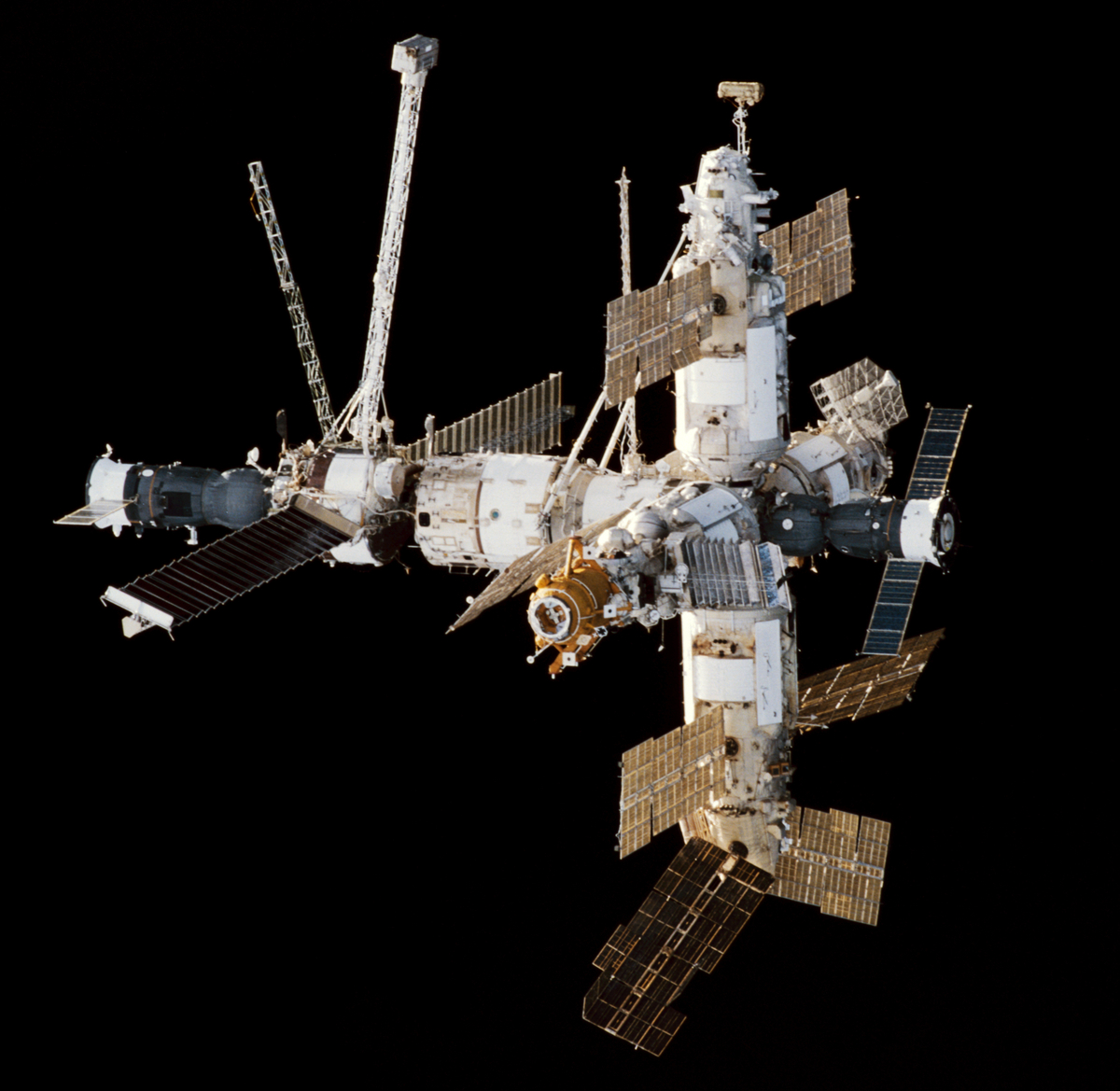
Historic Orbit Mission of Space Station Mir
Russia
Science
4 min read
Updated By: History Editorial Network (HEN)
Published:
The Mir station, a groundbreaking advancement in space exploration, was launched, marking a historic achievement in scientific research. This ambitious project was a collaboration between various countries, with Russia playing a leading role. The station served as a symbol of human innovation and dedication to pushing the boundaries of knowledge beyond Earth's atmosphere.
The Mir station was the first consistently inhabited long-term research station in outer space, demonstrating humanity's capability to live and work in a microgravity environment for extended periods. This feat paved the way for future space stations, such as the International Space Station. The Mir station facilitated numerous scientific experiments in fields like biology, physics, and astronomy, providing valuable insights that would not have been possible on Earth.
The impact of the Mir station extended beyond scientific research. It fostered international cooperation and served as a testament to the power of collaboration in achieving extraordinary goals. The station also inspired generations of scientists, astronauts, and dreamers, showcasing the endless possibilities of space exploration.
The Mir station remained operational for an impressive amount of time, far surpassing its initial lifespan. It hosted cosmonauts from different countries, creating a diverse and inclusive environment for scientific discovery. The station's decommissioning in 2001 marked the end of an era in space exploration but left a lasting legacy in the annals of human history.
#MirStation #SpaceExploration #InternationalCooperation

Explore the Life Moments of
 AI Twin