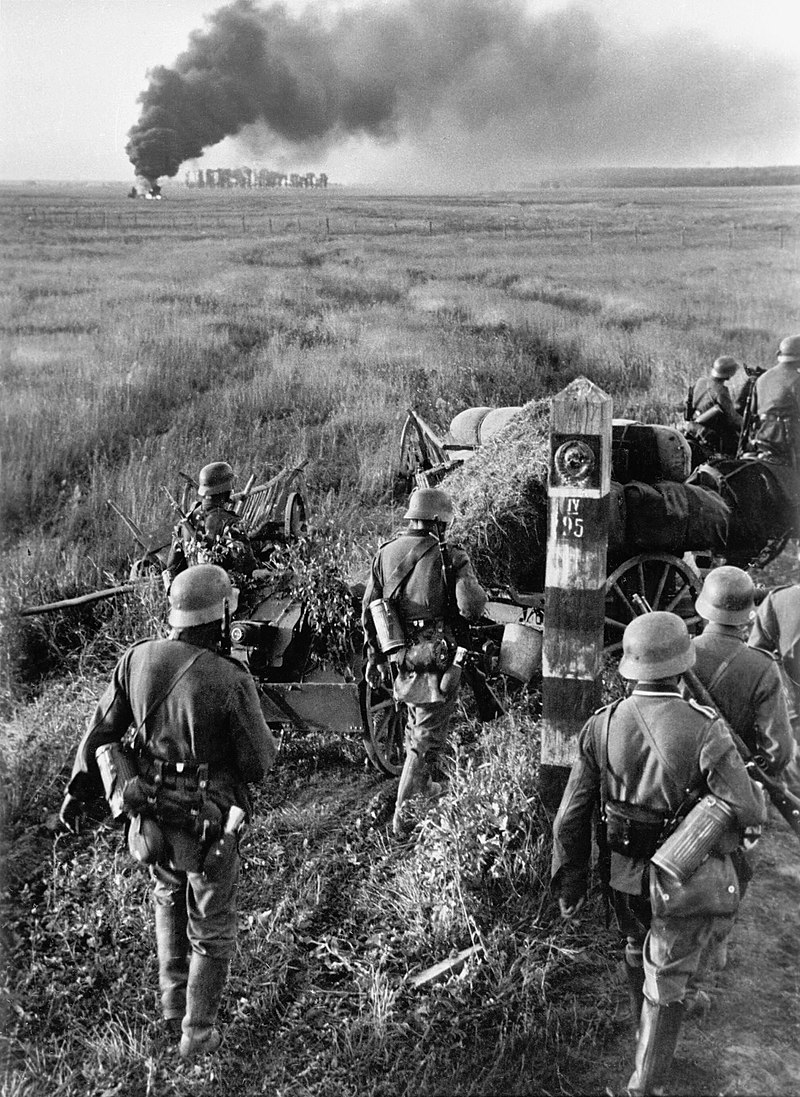
Germany invades Soviet Union, sparking WWII Eastern Front conflict
Russia

Global Conflict
4 min read
Updated By: History Editorial Network (HEN)
Published:
Germany's invasion of the Soviet Union marked the beginning of World War II on the Eastern Front. The surprise attack, codenamed Operation Barbarossa, was launched by Nazi Germany under the leadership of Adolf Hitler. The invasion aimed to conquer Soviet territories and eliminate the Soviet Union as a strategic threat.
Anticipating Soviet aggression, Hitler initiated the attack to achieve three main objectives: destroy the Red Army, dismantle the Soviet state, and secure resources for the German war machine. Despite initial success, the German forces faced harsh resistance from the Soviets, leading to a prolonged and brutal conflict characterized by large-scale battles, atrocities, and immense human suffering.
The invasion had far-reaching consequences for both Germany and the Soviet Union. For Germany, despite early victories, the campaign proved to be logistically challenging and strained the German military. The harsh winter conditions and determined Soviet resistance eventually halted the German advance and resulted in a long and costly war of attrition.
For the Soviet Union, the invasion resulted in widespread destruction, loss of life, and immense suffering for its civilian population. However, the Soviet Union's resilience, coupled with assistance from Allied powers, ultimately turned the tide against Germany and contributed significantly to the Allied victory in World War II.
The Germany invasion of the Soviet Union fundamentally altered the course of World War II on the Eastern Front, shaping the conflict's outcome and leaving a lasting impact on the history of both nations.
#Germany #SovietUnion #WorldWarII #EasternFront #OperationBarbarossa

Explore the Life Moments of
 AI Twin