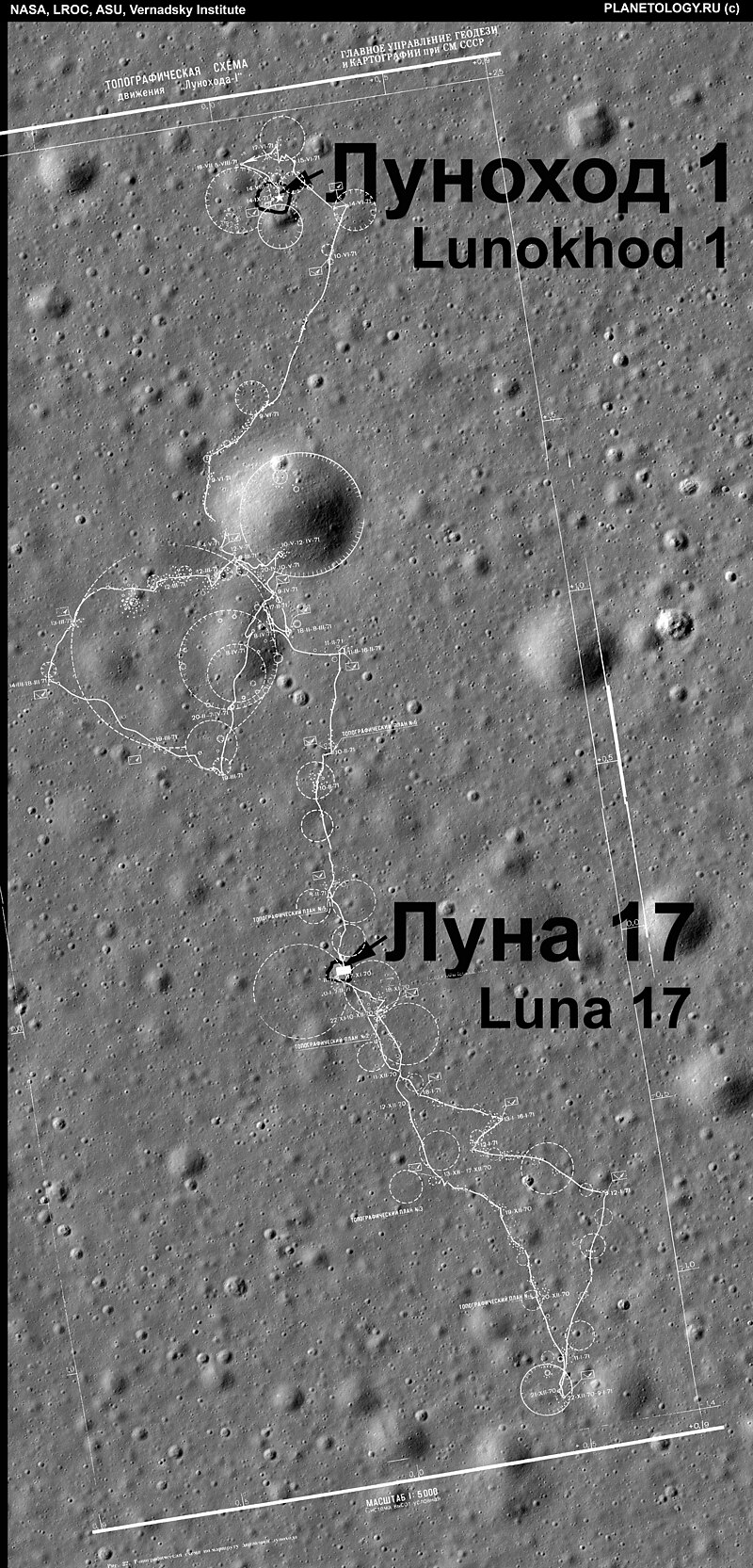
First Moon Rover: Lunokhod-1 on Moon Surface
Russia

Science
Technology
3 min read
Updated By: History Editorial Network (HEN)
Published:
In the early 1970s, Russia successfully landed the world's first moon rover, Lunokhod-1, on the moon's surface. The unmanned spacecraft, launched as part of the Soviet Luna program, marked a significant milestone in space exploration.
Weighing nearly two tons, Lunokhod-1 was equipped with cameras, spectrometers, and an X-ray fluorescence spectrometer to analyze the lunar surface. It was powered by solar panels and designed to operate during the two-week lunar day, with a radioisotope heater providing warmth during the frigid lunar nights.
Upon landing, Lunokhod-1 embarked on a mission to explore the moon's surface, transmitting valuable data and images back to Earth. It traveled a total of 10.54 kilometers, surpassing all expectations and setting a new record for off-planet roving which remains unbroken to this day.
The successful deployment of Lunokhod-1 demonstrated Russia's technological capabilities and determination to push the boundaries of exploration beyond Earth. The mission expanded our understanding of the moon's geology and provided crucial insights into the challenges of operating in the harsh lunar environment.
This historic achievement paved the way for future lunar missions and inspired generations of scientists and engineers to continue exploring the cosmos. Lunokhod-1 remains a testament to human ingenuity and the spirit of discovery that drives us to reach for the stars.
#Lunokhod1 #MoonRover #SpaceExploration #LunarMission

Explore the Life Moments of
 AI Twin