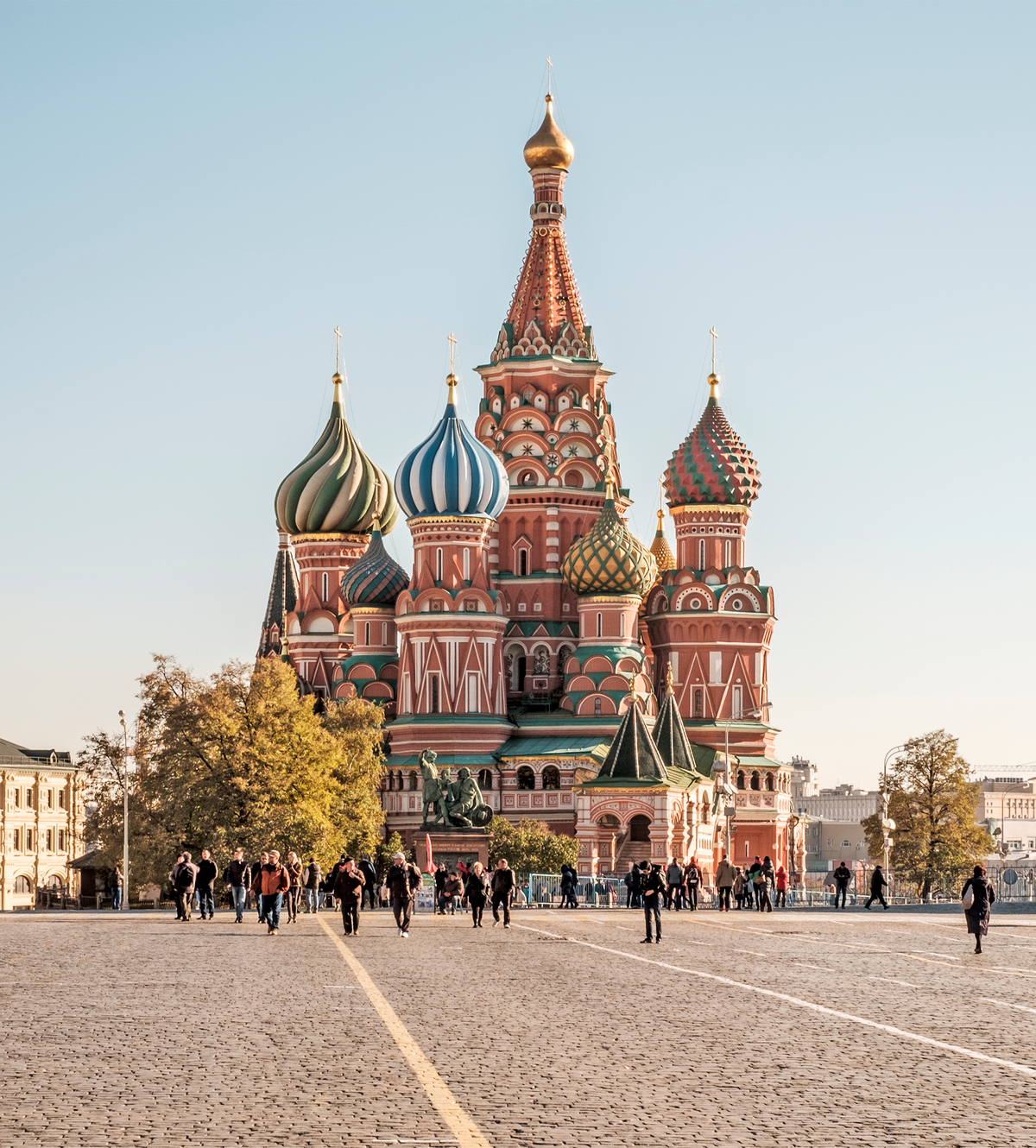
Consecration of "Trinity Church" in Moscow commemorates Kazan victory
Russia
8 min read
Updated By: History Editorial Network (HEN)
Published:
On July 12, 1561, in Moscow, Russia, the consecration of the Trinity Church, better known today as Saint Basil's Cathedral, marked a significant event in Russian history. This event commemorated the Russian victory over the Khanate of Kazan, a crucial milestone in Tsar Ivan IV's campaign to expand and consolidate the Russian state.
Historical Context: The Kazan Campaign
The Kazan Khanate, one of the successor states of the Mongol Empire's Golden Horde, was a significant threat to Muscovy, the predecessor of modern Russia. The campaign against Kazan was part of Ivan IV's broader efforts to eliminate this threat and extend Russian territory eastward. After a series of military campaigns, Ivan IV, known as Ivan the Terrible, successfully captured Kazan in 1552. This victory was seen as a monumental achievement and a divine blessing, and it solidified Ivan's power and the territorial integrity of Russia.
The Construction of Saint Basil’s Cathedral
To celebrate this victory, Ivan IV ordered the construction of a grand cathedral on Red Square in Moscow. The cathedral, originally named the Cathedral of the Intercession of the Most Holy Theotokos on the Moat, was intended to serve as a visible and lasting symbol of the triumph over the Kazan Khanate. The cathedral was designed by architects Barma and Postnik Yakovlev, who combined traditional Russian architectural elements with unique features that have made the structure iconic.
Architectural Significance
Saint Basil’s Cathedral is renowned for its striking and colorful design. The cathedral consists of nine individual chapels, each crowned with a unique onion dome. These domes are elaborately decorated in vibrant colors and patterns, creating a visual spectacle that has captivated visitors for centuries. The central church, dedicated to the Intercession of the Virgin Mary, is surrounded by eight smaller chapels, each commemorating a specific event in the Kazan campaign or a significant religious festival.
The most distinctive feature of Saint Basil’s Cathedral is its asymmetrical layout and the varied designs of its domes. This architectural choice breaks from the typical symmetry seen in many European cathedrals, making it a unique example of Russian architecture. The cathedral's vivid colors and intricate details are said to have been inspired by a vision of the Heavenly City described in the Book of Revelation.
Consecration and Historical Impact
The consecration of the Trinity Church on July 12, 1561, was a grand ceremony attended by Tsar Ivan IV and his court. The event was not only a religious celebration but also a political statement of the Tsar’s power and divine favor. The cathedral's consecration was intended to reinforce Ivan’s legitimacy and the divine approval of his rule and military conquests.
Legacy
Over the centuries, Saint Basil’s Cathedral has become one of Russia’s most iconic landmarks. It survived the tumultuous periods of Russian history, including the Time of Troubles, the Napoleonic Wars, and the Soviet era, during which it was secularized and transformed into a museum. Despite these challenges, the cathedral remains a powerful symbol of Russian cultural and historical heritage.
Today, Saint Basil’s Cathedral is a UNESCO World Heritage site and a must-visit destination for tourists. Its image is synonymous with Moscow and Russian architecture. The cathedral not only commemorates the victory over Kazan but also represents the artistic and architectural achievements of 16th-century Russia.
#MomentsOfLife #MoofLife_Moment #MoofLife #SaintBasilsCathedral #RussianHistory #IvanTheTerrible #KazanVictory #RussianArchitecture

Explore the Life Moments of
 AI Twin