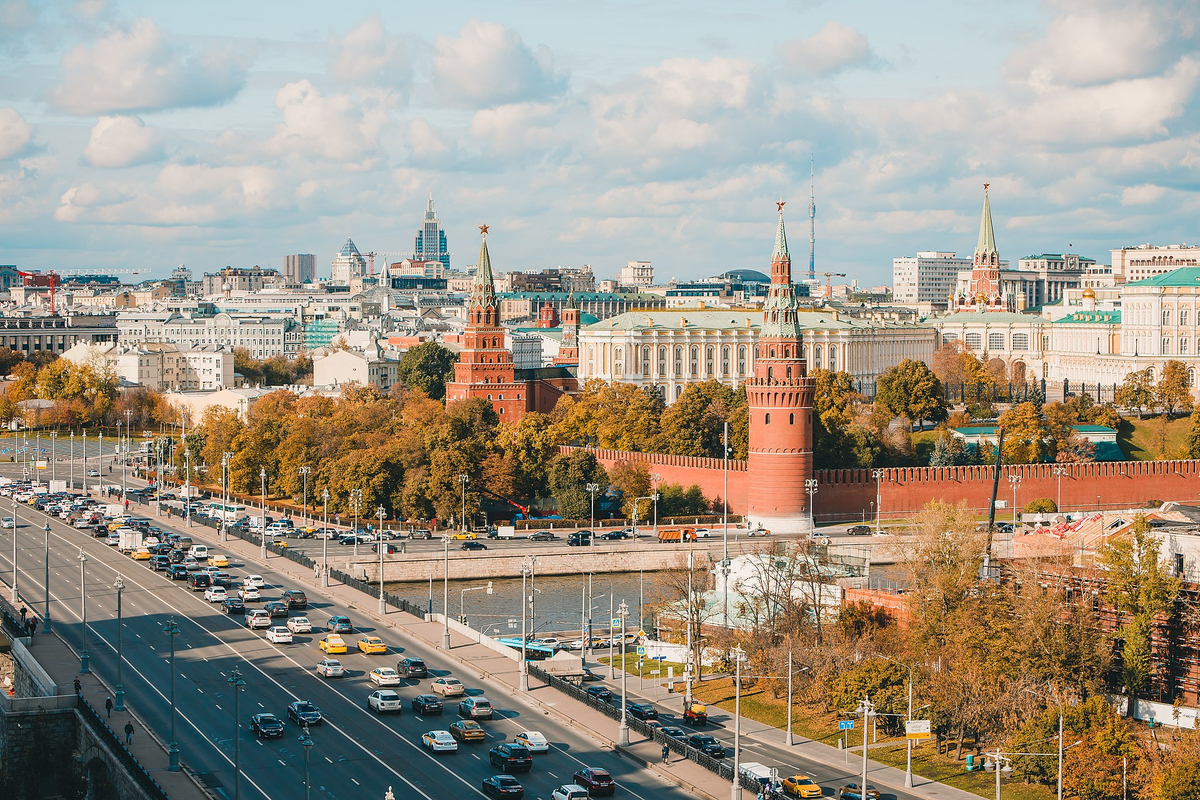
The Founding of Moscow's Kremlin
Russia
Cultural Heritage
4 min read
Updated By: History Editorial Network (HEN)
Published:
In 1156, the Moscow Kremlin was founded as a wooden fortress atop Borovitsky Hill. It served as a strategic defensive structure protecting the growing city of Moscow from invasions and raids. Over time, the Kremlin evolved into a symbol of Russian power and authority.
The location was chosen for its strategic advantages, situated at the confluence of the Moscow and Neglinnaya Rivers, providing natural defenses on three sides. The fortress played a crucial role in the consolidation of the Russian lands, serving as a political and religious center for the Grand Princes of Moscow.
The Moscow Kremlin became the seat of the Russian Orthodox Church and the residence of the Grand Princes, later known as the Tsars. Its architecture evolved from wood to stone, becoming a stunning example of Russian medieval fortification and religious art, with iconic structures like the Dormition Cathedral and the Ivan the Great Bell Tower.
Throughout history, the Kremlin witnessed numerous invasions, uprisings, and political intrigues. It survived fires, sieges, and revolutions, always remaining a symbol of Russian resilience and heritage. The fortress was expanded and renovated by various rulers, each leaving their mark on its architecture and history.
Today, the Moscow Kremlin stands as a UNESCO World Heritage Site, attracting millions of visitors each year. It continues to be the official residence of the President of Russia and a symbol of the country's political power and cultural identity. The Kremlin's walls have seen the rise and fall of empires, the birth of new ideas, and the forging of alliances and conflicts, making it a living testament to Russia's rich and complex history.
#MoscowKremlin #RussianHistory #CulturalHeritage

Explore the Life Moments of
 AI Twin