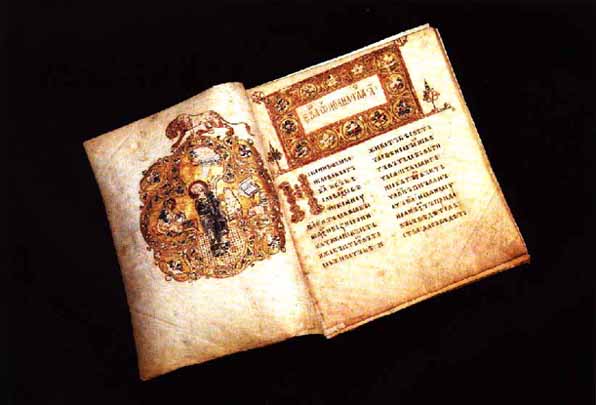
completion of Ostromir Gospel by Deacon Grigory
Russia
Art
Cultural
4 min read
Updated By: History Editorial Network (HEN)
Published:
In the 11th century, the completion of the Ostromir Gospel by Deacon Grigory marked a pivotal moment in Russian cultural history. This illuminated manuscript, written in Old Church Slavonic, is the oldest surviving Russian manuscript. Commissioned by Prince Mstislav of Chernigov, the gospel is named after its scribe, Ostromir, who transcribed the text with remarkable precision and artistic skill.
The Ostromir Gospel is highly significant as it provides valuable insights into early Russian literacy, religious practices, and artistic traditions. Its intricate illuminations and calligraphy showcase the creativity and craftsmanship of medieval Russian scribes. The gospel also played a crucial role in the dissemination of Christianity in the region, serving as a tool for religious instruction and inspiration.
Deacon Grigory's meticulous work on the Ostromir Gospel exemplifies the dedication and expertise of scribes during the medieval period. His contribution to this masterpiece not only preserved the Christian teachings for future generations but also contributed to the development of Russian writing and bookmaking.
Today, the Ostromir Gospel is housed in the Russian National Library in St. Petersburg, where it stands as a testament to the cultural heritage of early Russia. Its survival over the centuries is a tribute to the enduring legacy of Russian craftsmanship and intellectual pursuits.
#OstromirGospel #RussianManuscript #MedievalRussia #DeaconGrigory #RussianHeritage #CulturalHistory

Explore the Life Moments of
 AI Twin