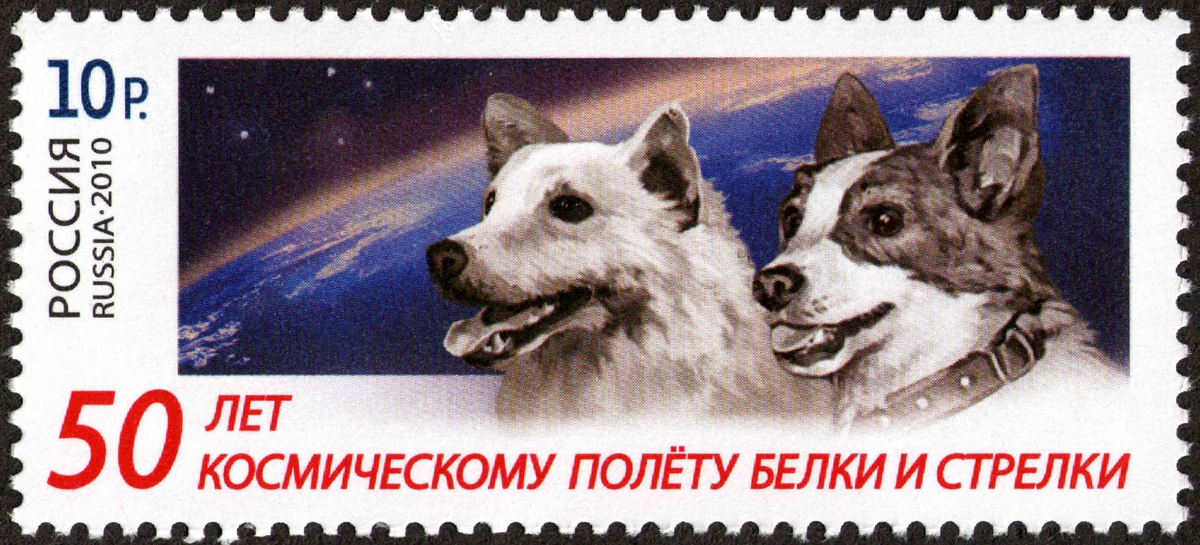
Belka and Strelka: Earth's First Orbiting Animals
Russia

Science
Space Exploration
4 min read
Updated By: History Editorial Network (HEN)
Published:
In August 1960, Belka and Strelka, two dogs from the Soviet Union, etched their names in history by becoming the first living creatures to orbit the Earth. The mission was a part of the Soviet space program's efforts to study the effects of space travel on living organisms, paving the way for human space exploration.
Belka and Strelka, along with a few mice, flies, plants, and fungi, were launched into space aboard Sputnik 5. They spent a day in orbit, experiencing weightlessness and high levels of radiation before safely returning to Earth. The mission was a resounding success, proving that animals could survive and function in space.
The accomplishment of Belka and Strelka had a profound impact on the scientific community and the world. It demonstrated the feasibility of sending living beings into space and returning them safely, a crucial step in the eventual manned space missions that followed. The data collected from the mission provided valuable insights into the physiological and psychological effects of space travel, aiding in the development of space exploration technologies.
Belka and Strelka quickly became international celebrities, capturing the hearts of people around the world with their bravery and resilience. Their mission highlighted the importance of animal testing in space exploration, igniting ethical debates about the use of animals in scientific research.
Today, Belka and Strelka are remembered as pioneers in space exploration, paving the way for future astronauts and cosmonauts. Their legacy lives on in the annals of space history, inspiring generations to push the boundaries of human knowledge and exploration.
#Belka #Strelka #SpaceExploration #SovietUnion

Explore the Life Moments of
 AI Twin