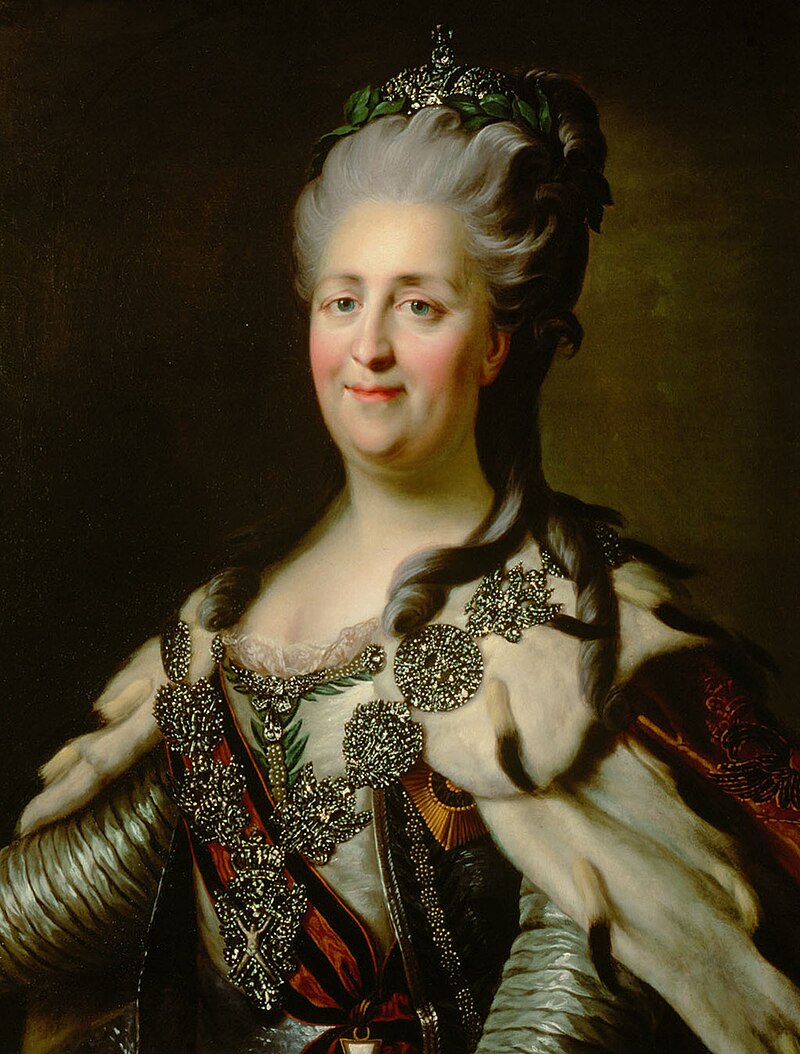
Accession of Catherine the Great to the Russian throne
Russia
Political
3 min read
Updated By: History Editorial Network (HEN)
Published:
Catherine the Great ascended to the Russian throne after a coup d'état against her husband, Peter III. Born in Prussia, she married into the Russian royal family. Her reign was marked by modernization efforts, territorial expansion, and cultural achievements. Catherine expanded Russia's borders, notably in the Black Sea region and Alaska. She embraced the Enlightenment ideals, corresponded with Voltaire, and promoted education and the arts. Her rule saw the establishment of the Smolny Institute for Noble Maidens and the Hermitage Museum, now one of the world's largest and oldest museums.
During her reign, Catherine implemented administrative reforms and updated the legal system. She encouraged Westernization, bringing in Western architects and thinkers to Russia. Her policies aimed to strengthen Russia's standing on the global stage and enhance the country's cultural and intellectual prestige. Catherine's rule also saw the consolidation of serfdom, leading to unrest among the lower classes.
The accession of Catherine the Great to the throne had a lasting impact on Russia's trajectory. Her reign is often considered a golden age in Russian history, marked by prosperity and cultural advancement. Catherine's policies set the stage for Russia's transformation into a major European power. Her legacy as a powerful and influential ruler is still admired and studied today.
#CatherineTheGreat #RussianEmpress #EnlightenmentIdeals #Modernization #CulturalAdvancement

Explore the Life Moments of
 AI Twin