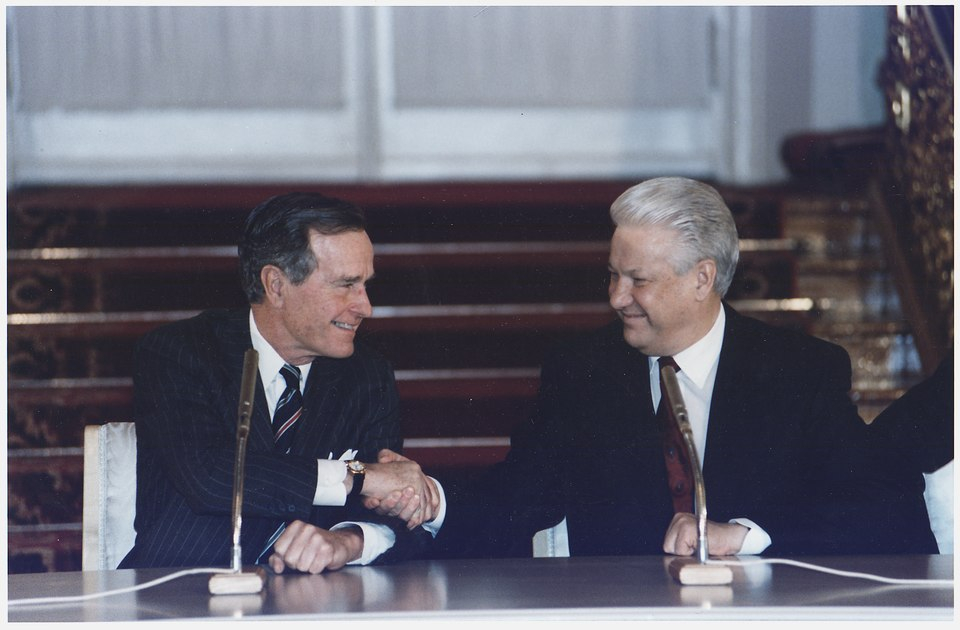
Ratification of START II treaty
Moscow, Russian Federation
Politics
International Relations
4 min read
Updated By: History Editorial Network (HEN)
Published:
Updated:
The START II treaty, formally known as the Strategic Arms Reduction Treaty II, was a bilateral agreement between the United States and Russia aimed at reducing the number of strategic nuclear weapons. The treaty was signed in 1993, but its ratification faced various challenges in both countries. The primary objective of START II was to eliminate multiple independently targetable reentry vehicles (MIRVs) on intercontinental ballistic missiles (ICBMs) and to reduce the overall number of nuclear warheads. This treaty was a continuation of the arms reduction efforts initiated by previous agreements, including the original START treaty, which had established a framework for reducing nuclear arsenals following the Cold War. The ratification process involved extensive negotiations and discussions, reflecting the complexities of U.S.-Russia relations during this period.
The impact of the START II treaty was significant in the context of global nuclear disarmament efforts. By committing to reduce nuclear arsenals, both nations aimed to enhance international security and stability. The treaty was seen as a step towards building trust between the two former adversaries and promoting further arms control initiatives. However, the ratification faced hurdles, including political opposition and concerns over compliance and verification measures. Despite these challenges, the treaty represented a crucial effort to curb the nuclear arms race and foster a cooperative approach to security issues. The eventual ratification of START II underscored the importance of diplomatic engagement in addressing the threats posed by nuclear weapons and highlighted the ongoing need for effective arms control mechanisms in the post-Cold War era.
#mooflife
#MomentOfLife
#StartIi
#NuclearDisarmament
#ArmsReduction
#U.s.-russiaRelations
#StrategicArmsTreaty
Primary Reference
START II

Explore the Life Moments of
 AI Twin