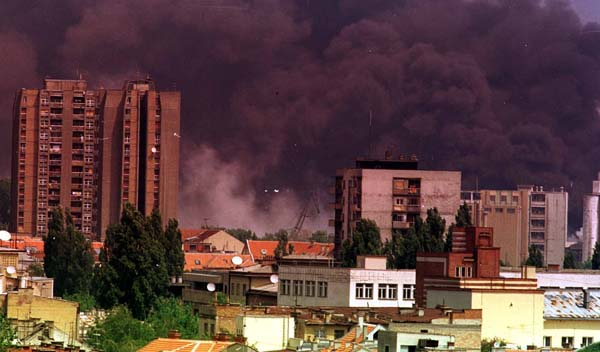
NATO Bombing of Yugoslavia During Kosovo Conflict
Belgrade, Serbia
Military
International Relations
4 min read
Updated By: History Editorial Network (HEN)
Published:
Updated:
NATO's bombing of Yugoslavia, known as Operation Allied Force, was a military campaign aimed at addressing the humanitarian crisis in Kosovo. The operation was initiated to compel the Yugoslav government to withdraw its forces from Kosovo, where ethnic Albanians were facing severe repression. The conflict arose from longstanding ethnic tensions and political disputes in the region, which escalated into violence and widespread human rights violations. NATO's intervention marked a significant shift in its operational strategy, as it was the first time the alliance engaged in military action without the approval of the United Nations Security Council, raising questions about the legality and legitimacy of such actions under international law.
The bombing campaign lasted for several weeks and involved extensive airstrikes targeting military installations, infrastructure, and other strategic sites across Yugoslavia. The operation was met with mixed reactions globally; while many Western nations supported the intervention as a necessary step to prevent further atrocities, Russia condemned it as a violation of international law and an infringement on its influence in the Balkans. The aftermath of the bombing led to the eventual withdrawal of Yugoslav forces from Kosovo and the establishment of a United Nations administration in the region. The conflict and NATO's actions had lasting implications for international relations, particularly in the context of NATO-Russia relations and the evolving nature of military interventions in humanitarian crises.
#mooflife
#MomentOfLife
#Nato
#Yugoslavia
#KosovoConflict
#OperationAlliedForce
#InternationalLaw
Primary Reference
NATO bombing of Yugoslavia

Explore the Life Moments of
 AI Twin