Moscow and the Helsinki Final Act
United States of America and Russia
Politics
4 min read
Updated By: History Editorial Network (HEN)
Published:
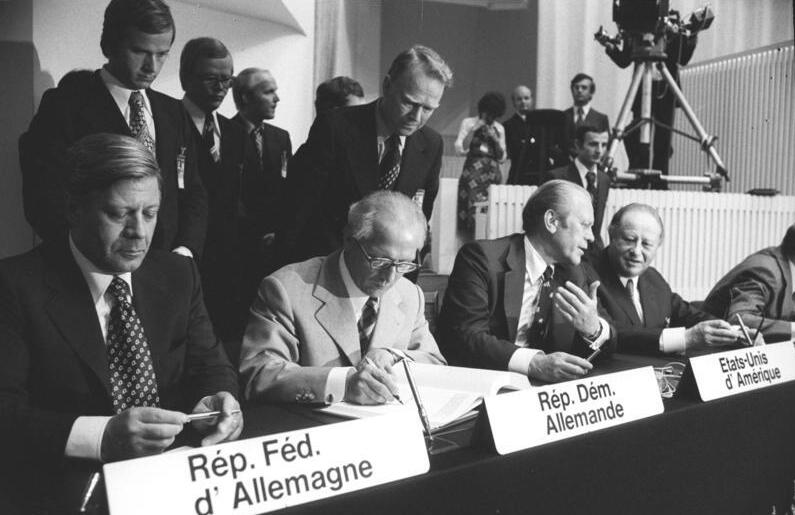
The Helsinki Final Act emerged from a series of negotiations involving numerous countries, including the United States and the Soviet Union. This agreement, while not legally binding, marked a pivotal moment in international relations by acknowledging the geopolitical realities of the time, particularly the Soviet Union's influence over Eastern Europe. The Act recognized the Soviet annexation of the Baltic states—Estonia, Latvia, and Lithuania—an event that had occurred decades earlier. By signing the Act, the U.S.-led West effectively accepted the Soviet sphere of influence, which was a significant shift in diplomatic relations during the Cold War. The Act included provisions on security, cooperation in various fields, and respect for human rights, which would later become instrumental in fostering dialogue between East and West.
The impact of the Helsinki Final Act extended beyond its immediate context. It laid the groundwork for future negotiations and discussions that contributed to the eventual easing of tensions during the Cold War. The emphasis on human rights within the Act provided a platform for dissidents in Eastern Europe to challenge oppressive regimes, ultimately leading to significant political changes in the region. The Act's legacy is evident in its role in promoting dialogue and cooperation, which were crucial in the processes that led to the end of the Cold War. The Helsinki Final Act is often viewed as a turning point that facilitated a more stable and cooperative international environment, influencing diplomatic strategies and policies in the following decades.
#mooflife
#MomentOfLife
#HelsinkiFinalAct
#ColdWar
#SovietUnion
#EasternEurope
#InternationalRelations

Explore the Life Moments of
 AI Twin