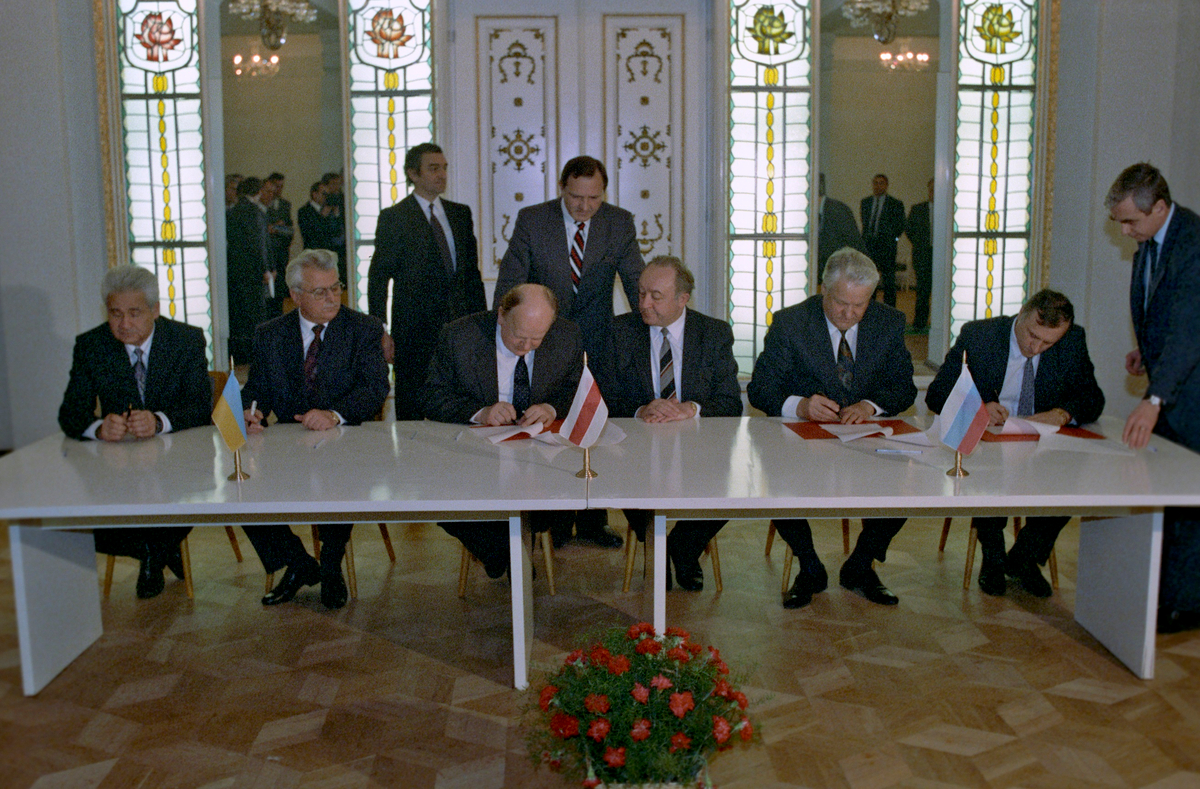
Denuclearization Agreement for Former Soviet States
United States of America and Russia
Politics
International Relations
Disarmament
4 min read
Updated By: History Editorial Network (HEN)
Published:
The Lisbon Protocol was a pivotal agreement aimed at the denuclearization of former Soviet states, specifically Ukraine, Belarus, and Kazakhstan. This protocol emerged in the context of the dissolution of the Soviet Union, which left these nations with significant nuclear arsenals. The agreement was part of a broader effort to ensure global security and prevent the proliferation of nuclear weapons following the Cold War. By committing to denuclearization, these countries agreed to relinquish their nuclear weapons and join the Treaty on the Non-Proliferation of Nuclear Weapons (NPT) as non-nuclear weapon states. This move was crucial in stabilizing the region and reducing the risk of nuclear conflict, as it aimed to eliminate the potential for these weapons to fall into the hands of rogue states or non-state actors.
The impact of the Lisbon Protocol was substantial, as it facilitated the dismantling of thousands of nuclear warheads and delivery systems. Ukraine, for instance, inherited the third-largest nuclear arsenal in the world after the Soviet Union's collapse. The agreement not only contributed to disarmament but also fostered international cooperation, with the United States and Russia playing significant roles in providing assistance and oversight during the disarmament process. By the time the protocol was fully implemented, it had set a precedent for future arms control agreements and demonstrated the effectiveness of diplomatic efforts in addressing nuclear proliferation. The successful denuclearization of these states has been cited as a model for other regions facing similar challenges, highlighting the importance of multilateral agreements in promoting global security.
#mooflife
#MomentOfLife
#Denuclearization
#LisbonProtocol
#NuclearDisarmament
#FormerSovietStates
#InternationalRelations

Explore the Life Moments of
 AI Twin