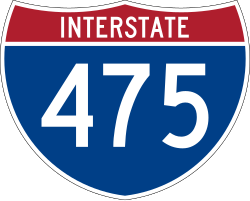
Interstate 475 Named After Rosa Parks
Interstate 475, Toledo and Perrysburg, Ohio, United States
Transportation
Infrastructure
Local History
6 min read
Updated By: History Editorial Network (HEN)
Published:
Updated:
On 10/05/1990, the Ohio Department of Transportation officially dedicated a 10-mile section of Interstate 475 to civil rights pioneer Rosa Parks, honoring her contributions to equality and the American Civil Rights Movement. The designated stretch of highway runs between Perrysburg and Toledo in northwestern Ohio and became one of the early roadway tributes recognizing Parks during her lifetime.
The renaming effort was supported through state legislation signed into law by Ohio Governor Dick Celeste. The proposal was championed by State Representative Casey Jones, a Democratic lawmaker from Toledo, who advocated selecting a nationally recognized civil rights figure whose name would be immediately familiar to travelers using the interstate corridor. According to reports surrounding the dedication, Jones believed the memorial designation could encourage motorists to reflect on Parks’ historical role and the broader struggle for racial equality in the United States.
Although the roadway officially remained part of Interstate 475 on maps and transportation records, commemorative signs identifying the highway in Rosa Parks’ honor were installed at several major access points. These markers included westbound entrances near Jackman Street and Auburn Avenue, along with eastbound entrances near State Route 25 in Perrysburg. The signage served as a visible public memorial integrated into everyday transportation infrastructure.
By 1990, Rosa Parks had already become internationally recognized for refusing to surrender her seat to a white passenger on a segregated Montgomery city bus on 01/12/1955. Her arrest triggered the Montgomery Bus Boycott, a 381-day protest that became one of the foundational events of the modern Civil Rights Movement. During the late 20th century, states and municipalities increasingly honored Parks through schools, streets, public buildings, and transportation-related memorials connected to her role in challenging segregation on public transit.
The Ohio highway dedication reflected a broader national trend of recognizing civil rights leaders through public infrastructure and official commemorations. Parks herself remained active in educational and civic initiatives during this period, continuing her work through public appearances and youth-focused programs from her home in Detroit.
Why This Moment Matters :
The naming of part of Interstate 475 after Rosa Parks demonstrated how public infrastructure became a vehicle for preserving civil rights history in everyday civic life. The dedication also linked modern transportation systems with the historical struggle against segregation that had originally brought Parks national attention.
#mooflife
#MomentOfLife
#RosaParks
#CivilRights
#Interstate475
#Toledo
#SocialJustice
Primary Reference
NAMES IN THE NEWS : Highway Named for Rosa Parks

Explore the Life Moments of
 AI Twin