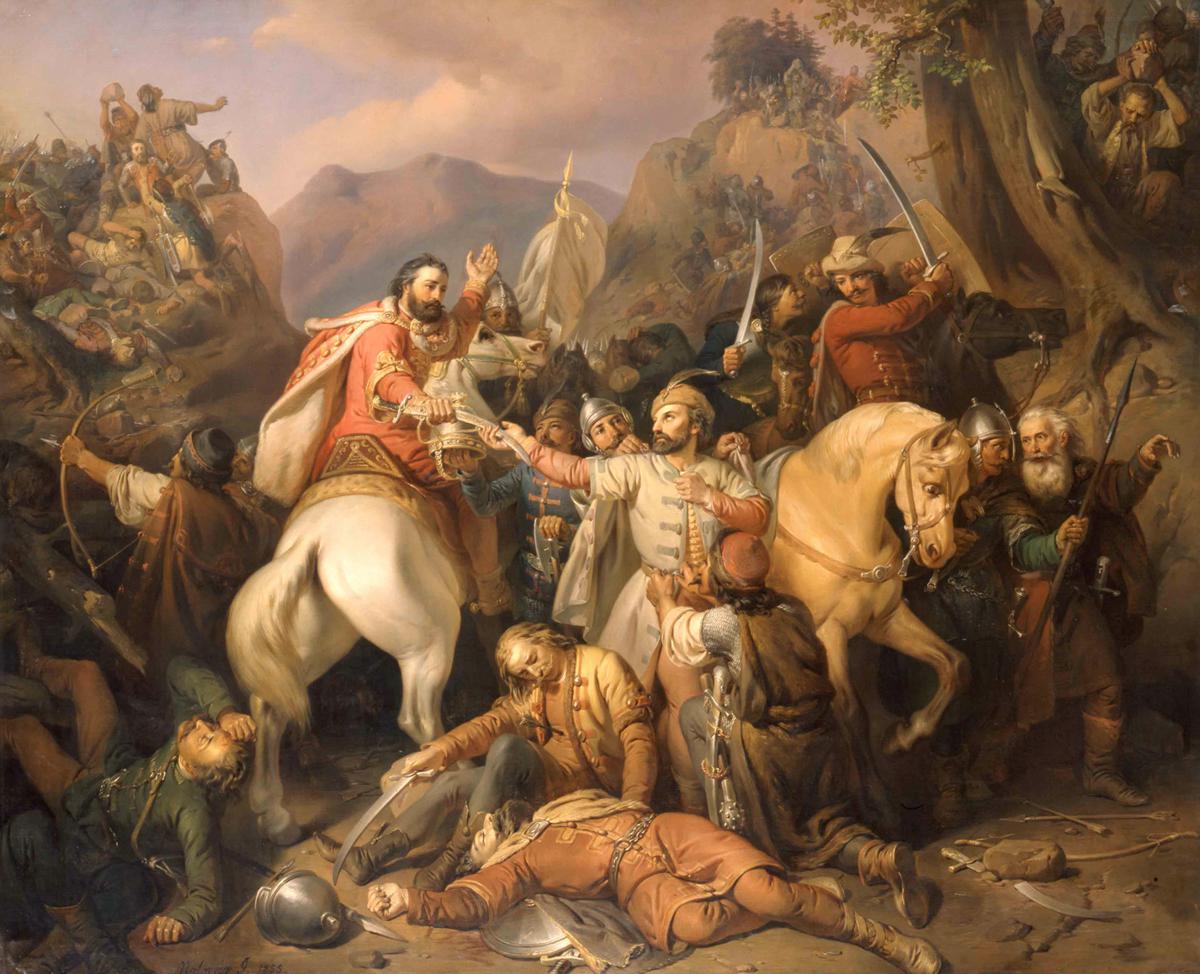
Battle of Posada: Wallachians triumph over Hungarians
Romania
Political
4 min read
Updated By: History Editorial Network (HEN)
Published:
In the early 14th century, Wallachia and Hungary were engaged in territorial disputes over control of the region. The Battle of Posada marked a significant clash between the two powers, where Wallachian forces led by Basarab I secured a decisive victory over the Hungarian army.
Basarab I, a cunning and strategic ruler, was determined to assert Wallachian independence and push back against Hungarian influence. With a smaller army compared to the Hungarian forces, Basarab I employed guerrilla tactics and utilized the difficult terrain to his advantage. The Wallachians launched a surprise attack on the unsuspecting Hungarian troops, catching them off guard and inflicting heavy casualties.
The defeat at Posada was a severe blow to the Hungarian forces, weakening their hold over the region and bolstering Wallachian autonomy. Basarab I emerged as a formidable leader, earning respect for his military prowess and securing greater autonomy for Wallachia.
The Battle of Posada stands as a testament to the resilience and strategic acumen of the Wallachian forces, showcasing their ability to overcome larger and more established powers. The victory solidified Wallachia's position as a significant player in the region and set the stage for future conflicts and alliances.
The legacy of the Battle of Posada reverberates through Romanian history, symbolizing the spirit of resistance against foreign domination and the triumph of determination in the face of adversity. It remains a defining moment in the struggle for independence and self-determination.
#Wallachia #Hungary #Independence #StrategicVictory #MedievalConflict #BasarabI #TerritorialDisputes
Primary Reference
Battle of Posada - Wikipedia

Explore the Life Moments of
 AI Twin