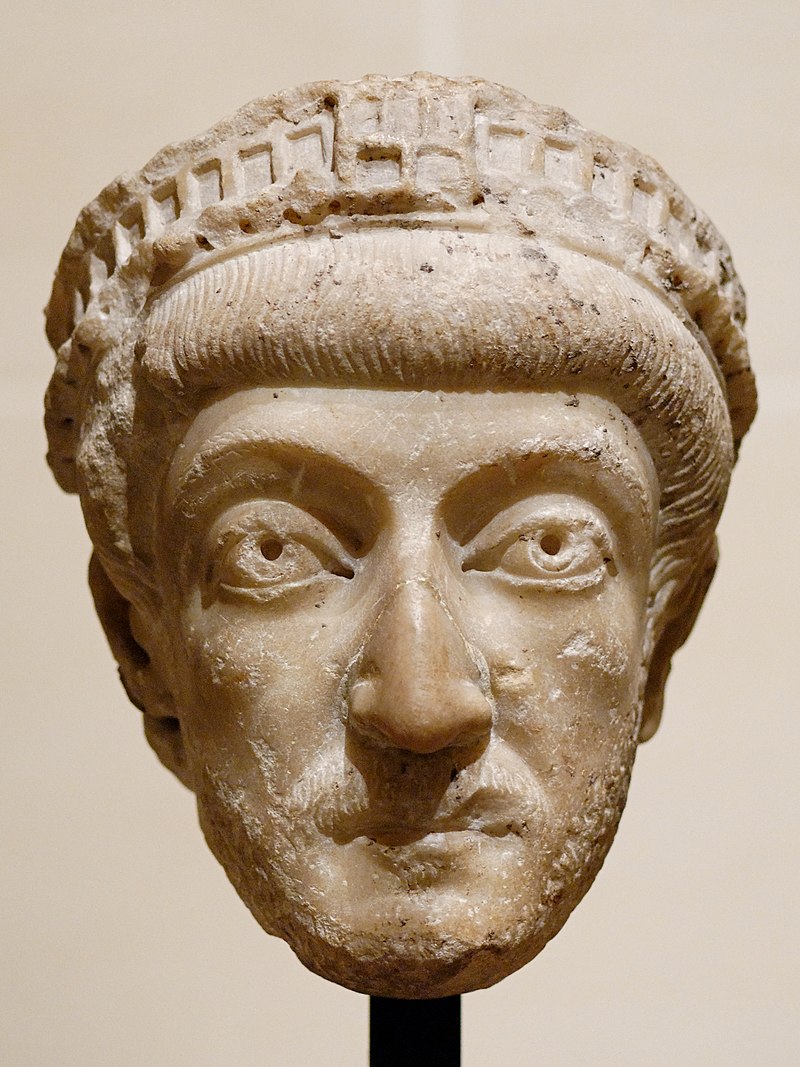
End of Theodosius II's Long Reign
Italy
Empire
Political
Rome
Roman Empire
5 min read
Updated By: History Editorial Network (HEN)
Published:
Updated:
The reign of Eastern Roman Emperor Theodosius II came to an unexpected end on 28/07/450, following a fatal riding accident near Constantinople. According to historical accounts, the emperor fell from his horse while crossing the River Lycus and suffered a severe spinal injury. His death concluded a 42-year reign that began in 408 AD, making it one of the longest continuous reigns of any Roman emperor.
In the years leading up to his death, the imperial court was marked by internal rivalries and shifting influence. The emperor’s sister, Pulcheria, who had long played a central role in governance, was temporarily sidelined by the eunuch official Chrysaphius. Chrysaphius gained prominence at court and influenced key decisions, including the exile of Empress Eudocia. These internal divisions affected both political stability and imperial policy during the final phase of Theodosius II’s rule.
Externally, the Eastern Roman Empire faced sustained pressure from the Huns under Attila. During this period, imperial policy relied heavily on diplomacy and financial payments to maintain peace. Historical sources indicate that substantial tributes, amounting to hundreds of kilograms of gold annually, were paid to the Huns. This approach strained the imperial treasury and drew criticism from military factions, contributing to tensions within the empire shortly before the emperor’s death.
Religious disputes also shaped the final years of Theodosius II’s reign. He supported the council held in Ephesus in 449, later referred to as the “Robber Council,” which endorsed Monophysite positions. The decisions of this council intensified divisions within the Christian Church and were later overturned at the Council of Chalcedon in 451, under his successor Marcian.
Following Theodosius II’s death, Pulcheria returned to power and married Marcian, who became emperor. This transition marked a shift in both religious and foreign policy, including a firmer stance against Attila and a move away from the previous system of tribute payments.
Why This Moment Matters:
The sudden death of Theodosius II on 28/07/450 directly led to a change in leadership that altered the Eastern Roman Empire’s policies toward both the Huns and internal religious disputes, setting the stage for the Council of Chalcedon and a new phase of imperial governance.
#ByzantineEmpire #TheodosiusII #AncientHistory #RomanEmpire #AttilaTheHun #Chalcedon
#mooflife
#MomentOfLife
#TheodosiusIi
#RomanEmpire
#Arcadius
#Honorius
#ByzantineEmpire
Primary Reference
Theodosius II

Explore the Life Moments of
 AI Twin