Themes and Significance of Robert Frost's 'West-Running Brook'
New Hampshire, South Shaftsbury, Vermont, United States
Literature
Poetry Analysis
Robert Frost
3 min read
Updated By: History Editorial Network (HEN)
Published:
Updated:
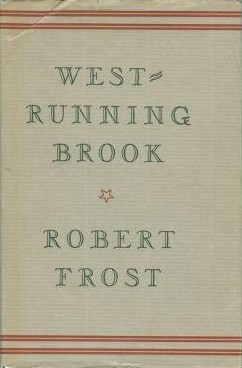
Robert Frost’s poem “West-Running Brook” was published in 1928 as the title piece of his collection West-Running Brook, issued by Henry Holt and Company. The poem is structured as a dialogue between a husband, Fred, and his wife as they observe a brook in New Hampshire that flows west, opposite to the general eastward direction of nearby streams that ultimately drain toward the Atlantic. The conversation unfolds in blank verse and reflects Frost’s continued use of dramatic dialogue, a technique he had developed in earlier works such as North of Boston. The setting draws on an actual brook near Frost’s farm in South Shaftsbury, Vermont, an area where he spent significant time during the 1920s.
Within the poem, the unusual westward flow becomes the central image guiding the couple’s reflections. The wife interprets the brook as a symbol of individuality and resistance, suggesting that it moves against prevailing direction while still remaining part of the larger natural system. The dialogue contrasts differing perspectives, with Fred questioning and the wife expanding the metaphor to human experience, continuity, and personal independence. As the conversation progresses, the brook is described as flowing contrary yet connected, emphasizing movement, change, and the persistence of identity. The poem became one of the longest and most philosophically extended pieces in the 1928 collection, which also included other poems written during Frost’s Vermont years.
#RobertFrost
#WestRunningBrook
#PoetryHistory
#AmericanPoetry
#NewEngland
Primary Reference
West-Running Brook

Explore the Life Moments of
 AI Twin