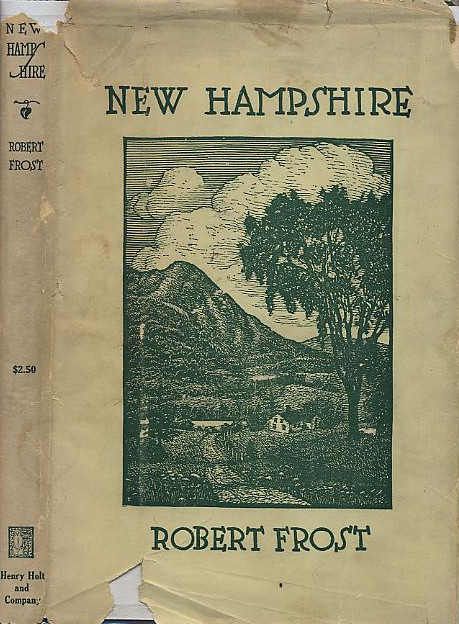
'New Hampshire': A Comprehensive Overview
New York City, United States
Travel
Culture
3 min read
Updated By: History Editorial Network (HEN)
Published:
Updated:
Robert Frost’s fourth poetry collection New Hampshire was published in November 1923 by Henry Holt and Company in New York. Subtitled “A Poem with Notes and Grace Notes,” the volume is structured around a long title poem followed by a section of extended narrative pieces labeled “Notes” and a final group of shorter lyrics labeled “Grace Notes.” The book appeared during a period of expanding recognition for Frost in the United States and included poems written in the early 1920s. Among its contents were “Stopping by Woods on a Snowy Evening,” “Fire and Ice,” “Nothing Gold Can Stay,” “The Star-Splitter,” and “Dust of Snow,” several of which became widely anthologized in later decades.
The title poem “New Hampshire” reflects on regional identity and rural life, while the “Notes” section contains longer narrative works such as “The Star-Splitter,” which tells the story of a farmer who burns his house to collect insurance money and purchase a telescope. The shorter “Grace Notes” include compact lyrical poems such as “Nothing Gold Can Stay” and “Dust of Snow,” both focused on fleeting moments in nature. “Stopping by Woods on a Snowy Evening,” one of the collection’s most frequently quoted poems, presents a traveler pausing in a snowy landscape before continuing on with obligations. In 1924, New Hampshire received the Pulitzer Prize for Poetry, the first of four Pulitzer Prizes awarded to Frost during his career.
#RobertFrost
#NewHampshire1923
#FireAndIce
#PoetryHistory
Primary Reference
New Hampshire (poetry collection)

Explore the Life Moments of
 AI Twin