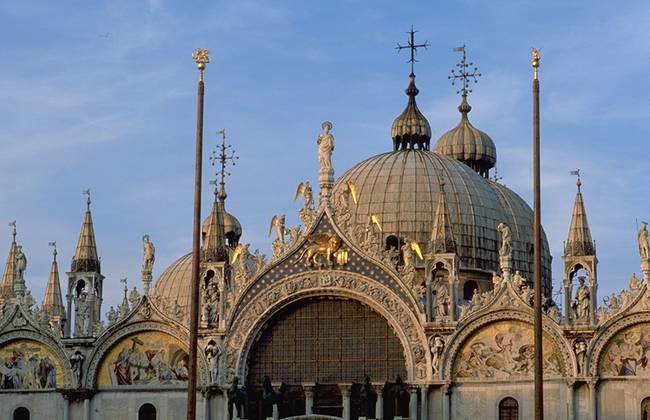
Venetian School's polychoral style spreads to Germany
Italy
Music History
Renaissance Music
Italian Music
4 min read
Updated By: History Editorial Network (HEN)
Published:
Updated:
The Venetian School, known for its innovative polychoral style, emerged as a significant force in music at the end of the 16th century. This style, characterized by the use of multiple choirs and spatial separation of singers, allowed for a rich tapestry of sound that was both complex and engaging. The techniques developed by composers in Venice, such as Giovanni Gabrieli, emphasized the interplay between different vocal groups, creating a dynamic auditory experience. As this style gained popularity, it began to spread northward into Germany, influencing local composers and changing the landscape of choral music in the region. The adoption of polychoral techniques in Germany marked a shift towards more elaborate choral compositions, which would later contribute to the development of the Baroque style.
The impact of the Venetian School's polychoral style on German music was profound. Composers in Germany began to experiment with the spatial arrangement of choirs and the use of contrasting musical textures. This led to the creation of larger choral works that incorporated multiple voices and instruments, enhancing the overall sound. The spread of this style also coincided with the rise of Lutheranism, which emphasized congregational singing and the importance of music in worship. As a result, the polychoral style not only enriched the musical repertoire but also played a crucial role in the cultural and religious life of the time. The influence of the Venetian School can be seen in the works of later German composers, who built upon these techniques to create their own distinctive styles, ultimately shaping the future of Western classical music.
#mooflife
#MomentOfLife
#VenetianSchool
#PolychoralStyle
#GermanMusic
#RenaissanceMusic
#MusicalInnovation

Explore the Life Moments of
 AI Twin