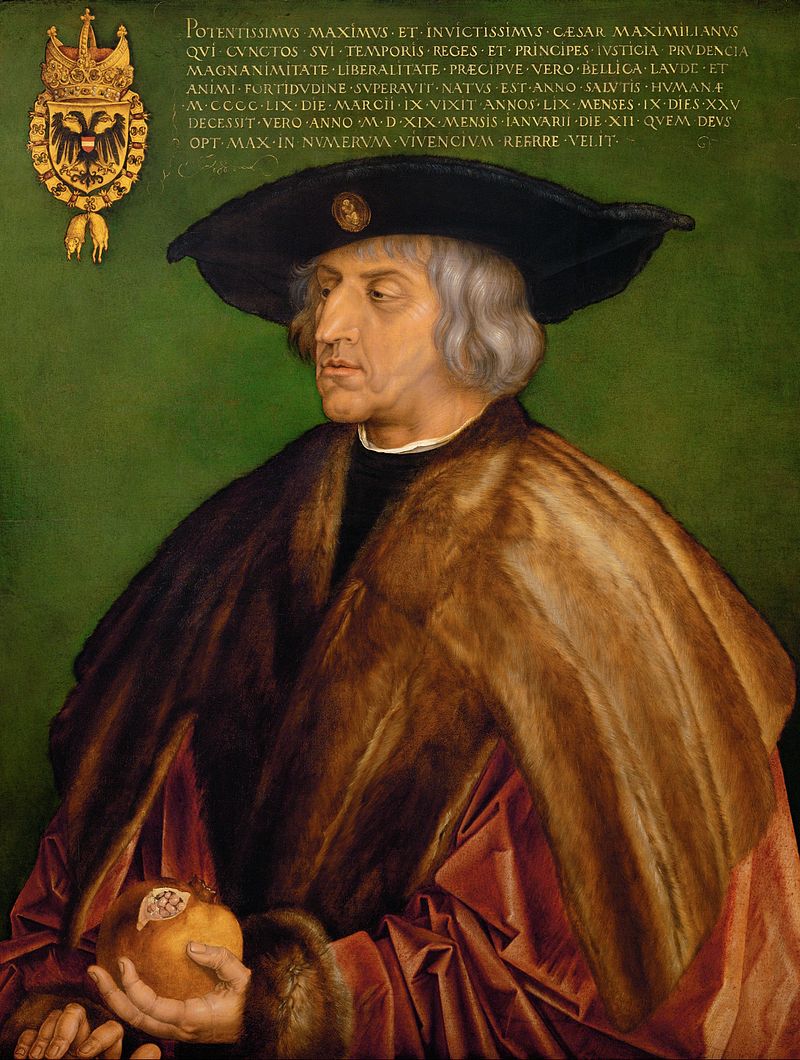
Portrait of Emperor Maximilian I by Albrecht Dürer
Italy
Renaissance Art
Portraiture
Historical Figures
4 min read
Updated By: History Editorial Network (HEN)
Published:
Updated:
Albrecht Dürer's Portrait of Emperor Maximilian I is a notable work that exemplifies the artistic developments of the Renaissance period. Dürer, a prominent figure in Northern Renaissance art, created this portrait to capture the likeness and authority of Maximilian I, who was the Holy Roman Emperor. The painting reflects the transition of artistic styles from the medieval period to the Renaissance, characterized by a focus on realism, human emotion, and the use of perspective. Dürer's technique involved meticulous attention to detail, which is evident in the emperor's attire and the textures of the fabric. The portrait not only serves as a representation of the emperor but also as a testament to Dürer's skill in portraiture, which was influenced by his studies in Italy, where he encountered the classical ideals of beauty and proportion.
The impact of this portrait extends beyond its artistic merit; it also holds historical significance. Maximilian I was a key figure in European politics, and his reign marked a period of consolidation of power within the Holy Roman Empire. The portrait was intended to convey the emperor's strength and legitimacy, reinforcing his status among European monarchs. Dürer's work contributed to the spread of Renaissance ideals in Northern Europe, influencing other artists and shaping the future of portrait painting. The painting is now recognized as a crucial piece in understanding the cultural and political landscape of the time, illustrating how art served as a medium for both personal and political expression.
#mooflife
#MomentOfLife
#AlbrechtDürer
#EmperorMaximilianI
#RenaissanceArt
#PortraitPainting
#NorthernRenaissance

Explore the Life Moments of
 AI Twin