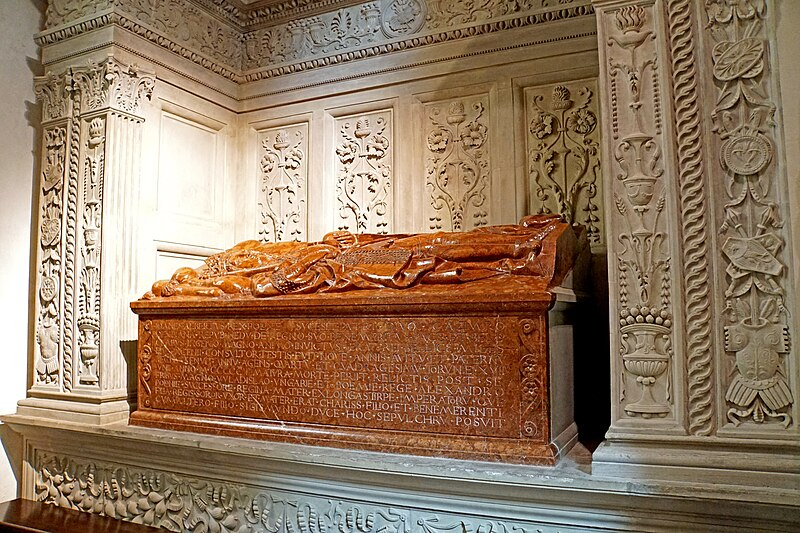
Completion of John I Albert's Tomb
Italy
Renaissance Art
Polish History
Architectural Heritage
3 min read
Updated By: History Editorial Network (HEN)
Published:
Updated:
The tomb of John I Albert, completed by the Italian artist Francesco Fiorentino, marks a pivotal development in the artistic landscape of Poland. This tomb is recognized as the first example of Renaissance architecture in the country, showcasing the influence of Italian humanism and artistic principles that were emerging during this period. The design and execution of the tomb reflect the transition from Gothic to Renaissance styles, characterized by a greater emphasis on symmetry, proportion, and the use of classical elements. Fiorentino's work not only served as a memorial for the Polish king but also as a significant cultural artifact that symbolized the integration of Renaissance ideals into Polish art and architecture. The completion of this tomb represented a broader movement within Poland, where the influx of Italian artists and humanists began to reshape the cultural and artistic identity of the region. This period saw an increase in the patronage of the arts, as local nobility and the monarchy sought to align themselves with the cultural advancements of Western Europe, particularly Italy. The tomb of John I Albert stands as a testament to this cultural exchange and the beginning of a new artistic era in Poland, influencing subsequent generations of artists and architects in the region.
#mooflife
#MomentOfLife
#JohnIAlbert
#FrancescoFiorentino
#RenaissanceArchitecture
#PolishArtHistory
#ItalianHumanism

Explore the Life Moments of
 AI Twin