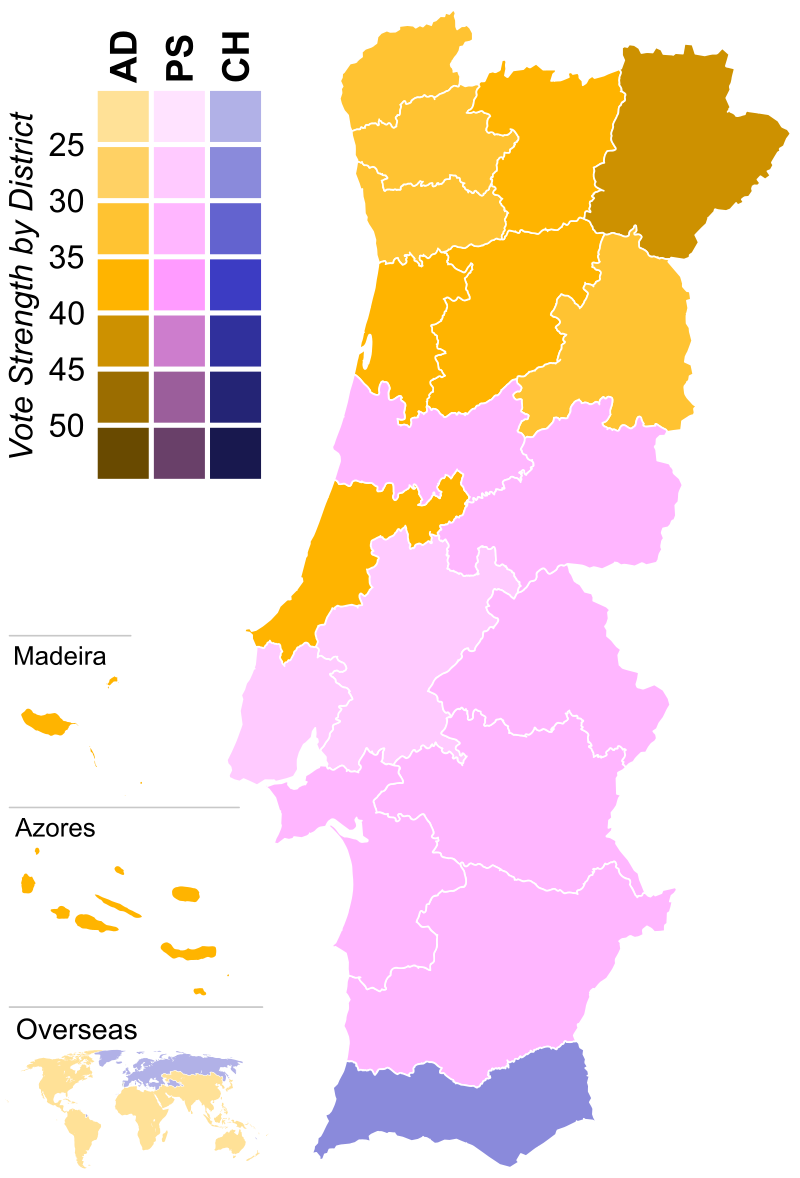
Democratic Alliance Wins Portuguese Election, Forms Minority Government, Faces Policy Challenges Ahead
Portugal
Political
Global Trade
4 min read
Updated By: History Editorial Network (HEN)
Published:
Updated:
The Democratic Alliance won the Portuguese legislative election and formed a minority government. This victory followed widespread dissatisfaction with the incumbent administration. The Democratic Alliance, a centrist political group, capitalized on voters' desires for political change.
Leading up to the election, economic issues, healthcare, and education were primary voter concerns. With 210 seats in the Assembly of the Republic, the Democratic Alliance secured 86 seats, falling short of a majority, thus necessitating the formation of a minority government. The incumbent government, the Socialist Party, garnered 82 seats, reflecting a significant decline in support.
This shift in political power is set to impact various policy approaches. The Democratic Alliance has emphasized fiscal responsibility, economic reform, and improvements in public services. Challenges such as negotiating support from other parties for passing legislation will shape this minority government’s approach.
Voter turnout was recorded at 68%, indicating active public engagement. Analysts predict that coalition partnerships and strategic alliances will play a crucial role in the governance process. The new government faces the immediate task of addressing national debt and implementing reforms to boost economic growth.
The international community is observing the Democratic Alliance’s strategies closely, particularly concerning European Union policies and economic relations.
#PortugueseElection #DemocraticAlliance #PoliticalShift #MinorityGovernment #MoofLife
Primary Reference
Your primer on Portugal's parliamentary elections - Atlantic Council

Explore the Life Moments of
 AI Twin