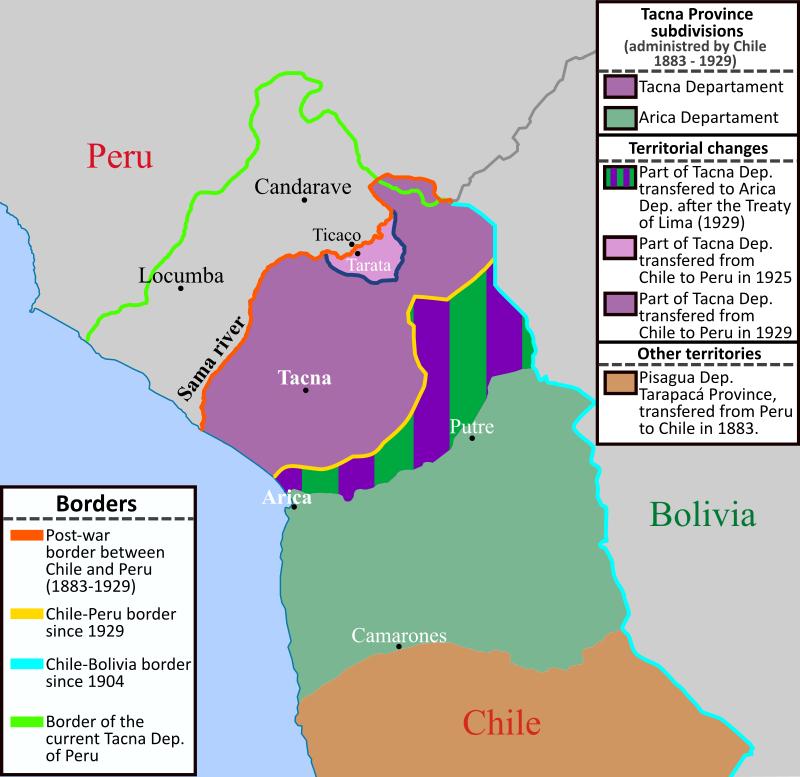
Treaty of Lima signed between Peru and Chile
Peru
International Relations
Historical Treaties
South American History
3 min read
Updated By: History Editorial Network (HEN)
Published:
Updated:
The Treaty of Lima, signed in 1929, marked a significant milestone in the diplomatic relations between Peru and Chile. This treaty was the culmination of a long-standing territorial dispute that had its roots in the War of the Pacific (1879-1884), which resulted in Chile's occupation of the Tacna and Arica regions. The Treaty of Lima returned the city of Tacna to Peru, thereby restoring a sense of national pride and territorial integrity for the Peruvian people. This agreement not only resolved the contentious issue of Tacna but also laid the groundwork for improved relations between the two nations. The treaty established a framework for future cooperation and dialogue, which was crucial for regional stability in South America. The resolution of this dispute allowed both countries to focus on internal development and fostered a more peaceful coexistence in the region. The Treaty of Lima is often viewed as a pivotal moment in Peruvian history, symbolizing the end of a chapter marked by conflict and the beginning of a new era of diplomacy and collaboration between Peru and Chile.

Explore the Life Moments of
 AI Twin