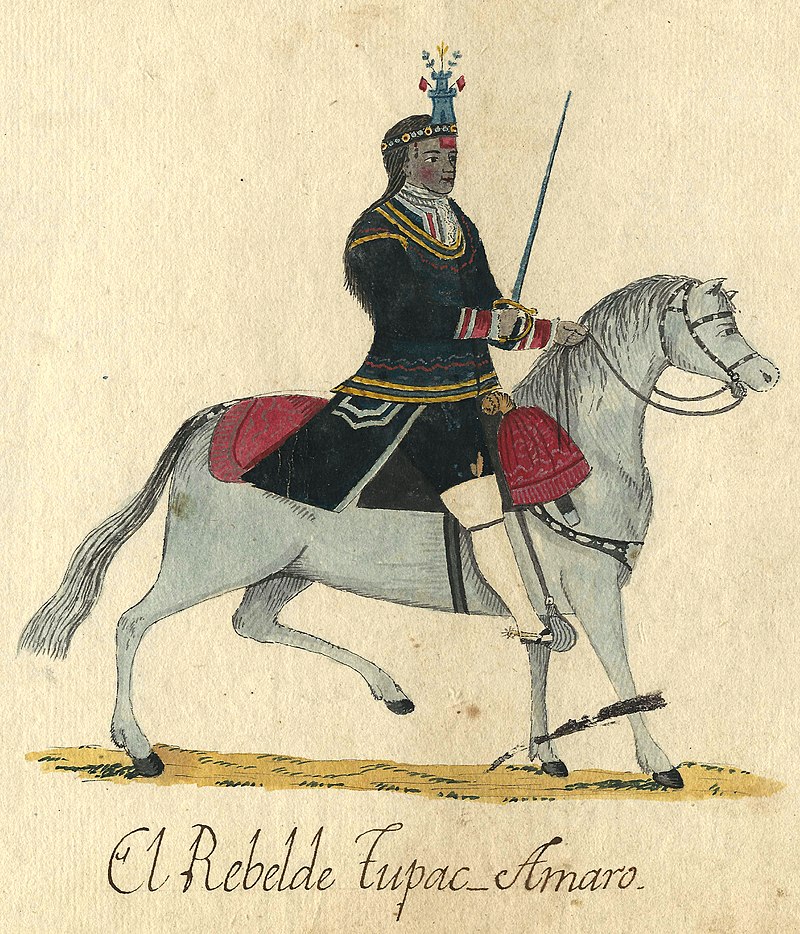
Túpac Amaru II Leads Indigenous Uprising in the Highlands Near Cuzco
Peru
Indigenous Movements
Latin America
3 min read
Updated By: History Editorial Network (HEN)
Published:
Updated:
The Túpac Amaru II Rebellion, which erupted in 1780, was a significant indigenous uprising in Peru led by José Gabriel Condorcanqui, who took on the name Túpac Amaru II. This rebellion was fueled by widespread discontent among the indigenous population due to oppressive Spanish colonial practices, including heavy taxation and forced labor. Túpac Amaru II aimed to restore Inca sovereignty and improve the living conditions of indigenous people, rallying support from various communities across the region. Initially, the rebellion saw several successes, capturing key towns and gaining momentum. However, the Spanish colonial forces eventually regrouped and launched a counter-offensive, leading to the rebellion's suppression in 1781. Túpac Amaru II was captured, and his execution marked a tragic end to the uprising. Despite its failure, the rebellion had a profound and lasting impact on Peru and the broader region, inspiring future movements advocating for independence and indigenous rights. The legacy of Túpac Amaru II continues to resonate in contemporary discussions about social justice and the rights of indigenous peoples in Latin America.

Explore the Life Moments of
 AI Twin