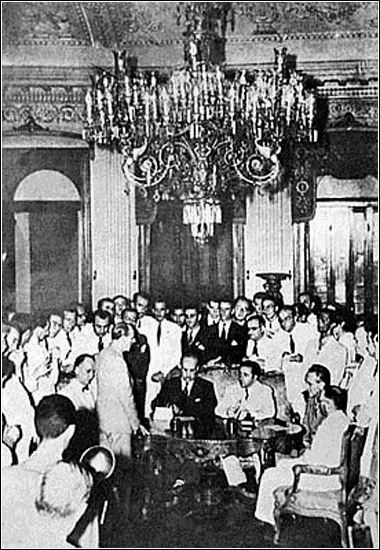
Rio Protocol Establishes Framework for Peaceful Resolution of Territorial Disputes in January 1942
Peru
International Relations
Diplomacy
3 min read
Updated By: History Editorial Network (HEN)
Published:
Updated:
The signing of the Rio Protocol in January 1942 marked a significant milestone in South American diplomacy, particularly in the context of Peru's territorial disputes. This agreement was primarily aimed at formalizing the boundary between Peru and its neighboring countries, notably Colombia. The Rio Protocol emerged as a response to the tensions that had escalated during the early 20th century, including the conflicts over territories such as Tacna and the Amazonas Department. By establishing clear territorial limits, the protocol sought to mitigate the potential for future conflicts in the region, fostering a more stable and peaceful coexistence among the nations involved. The agreement not only addressed immediate territorial concerns but also laid the groundwork for future diplomatic relations in South America. The Rio Protocol is often viewed as a crucial step towards regional cooperation and conflict resolution, highlighting the importance of dialogue and negotiation in international relations. Its legacy continues to influence the geopolitical landscape of the region today, serving as a reminder of the need for clear agreements in the pursuit of peace and stability.

Explore the Life Moments of
 AI Twin