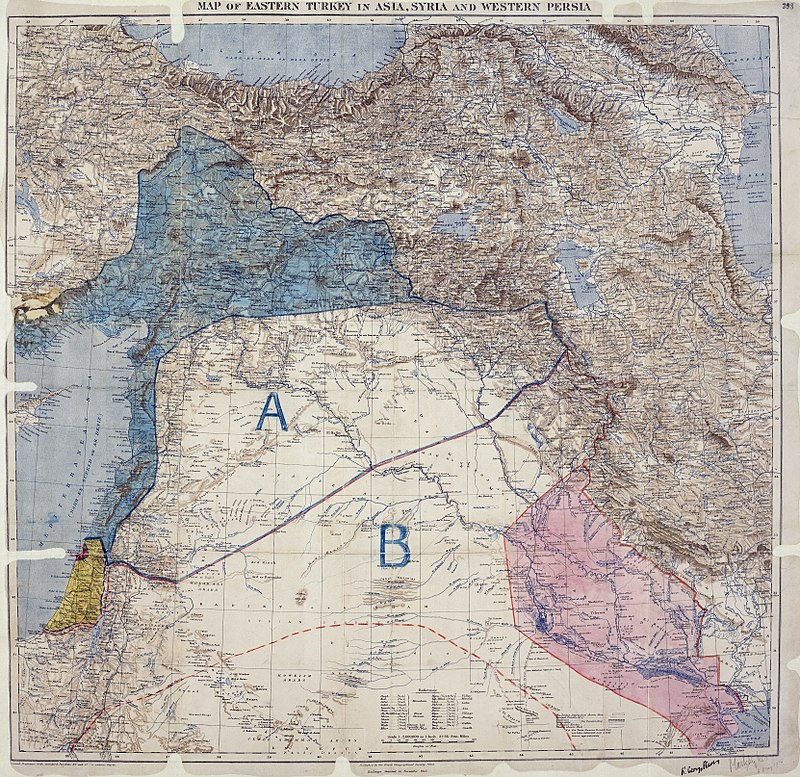
Sykes-Picot Agreement of 1916 and Its Implications for Palestine's Future
Palestine
International Relations
Middle East Studies
3 min read
Updated By: History Editorial Network (HEN)
Published:
Updated:
The Sykes-Picot Agreement of 1916 was a pivotal moment in the geopolitical landscape of the Middle East, particularly concerning Palestine's future. Conceived in secrecy during World War I, the agreement outlined the division of Ottoman territories between Britain and France. Notably, it proposed that most of Palestine would be designated as an international zone, free from direct colonial governance by either power. This vision aimed to address the aspirations of various ethnic and national groups in the region. However, the agreement contradicted earlier promises made to Arab nationalists, who were led to believe that they would gain independence in exchange for their support against the Ottomans. The conflicting commitments laid the groundwork for future tensions and conflicts in the region, as the aspirations of the local populations clashed with the imperial interests of European powers. The Sykes-Picot Agreement remains a significant historical reference point for understanding the complexities of Middle Eastern politics and the ongoing struggles over national identity and territorial claims in Palestine and beyond.
#mooflife
#MomentOfLife
#Sykes-picotAgreement
#Palestine
#MiddleEastHistory
#OttomanEmpire
#GeopoliticalConflicts

Explore the Life Moments of
 AI Twin