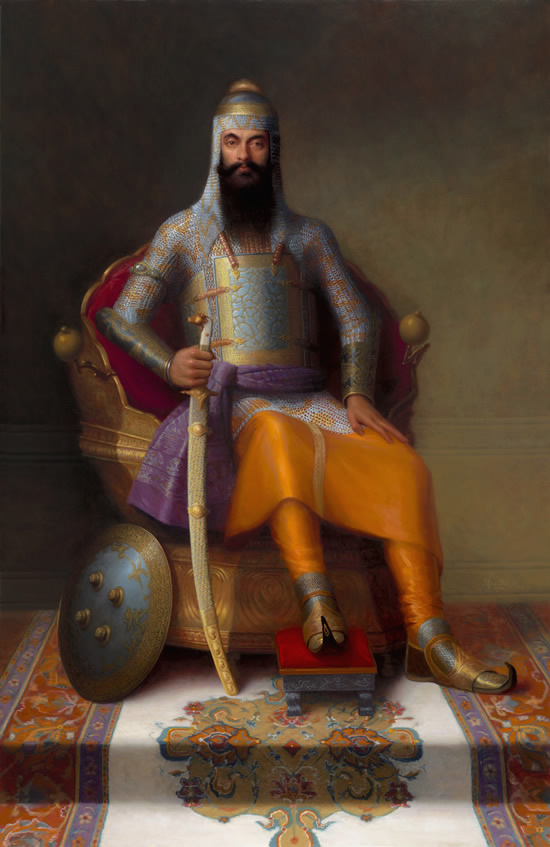
Ranjit Singh Leads Sikh Empire
Pakistan
Political
Cultural
4 min read
Updated By: History Editorial Network (HEN)
Published:
In 1801, the Sikh Empire was established, with Maharaja Ranjit Singh ascending to leadership. Ranjit Singh, a skilled military leader, united various Sikh factions under his rule, bringing stability to the region. His empire encompassed territories in present-day Pakistan and India, with Lahore as its capital.
Under Ranjit Singh's rule, the Sikh Empire flourished economically and culturally. He implemented policies that promoted trade and agriculture, leading to prosperity in the empire. Additionally, he encouraged art, music, and literature, making his court a center of vibrant cultural exchange.
The establishment of the Sikh Empire brought a significant shift in power dynamics in the region. It posed a challenge to the existing Mughal and Afghan rule, asserting Sikh dominance. The empire's military strength and strategic alliances enabled it to expand its territory and influence, becoming a formidable force in the Indian subcontinent.
Ranjit Singh's leadership was characterized by tolerance and respect for different faiths, fostering religious harmony among diverse communities. This inclusive approach earned him admiration and loyalty from his subjects, contributing to the stability of his empire.
The legacy of the Sikh Empire under Maharaja Ranjit Singh continues to resonate in the region. His reign marked a period of Sikh political ascendancy and cultural renaissance, leaving a lasting impact on the history of Pakistan and the Indian subcontinent.
#SikhEmpire #MaharajaRanjitSingh #UnityInDiversity #CulturalRenaissance #PoliticalAscendancy

Explore the Life Moments of
 AI Twin