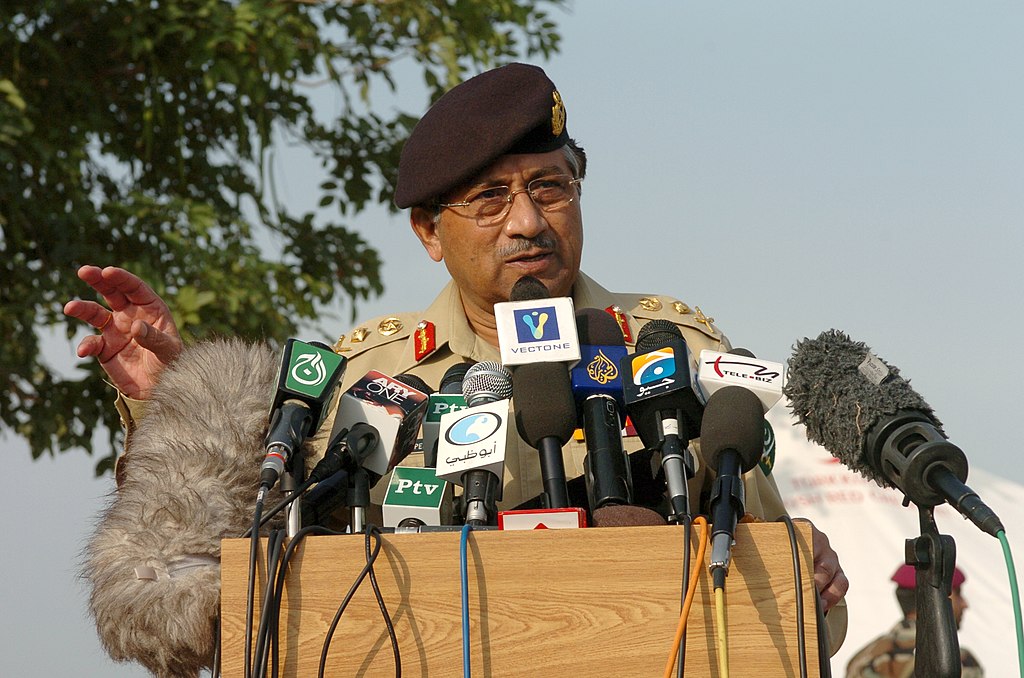
General Pervez Musharraf's Bloodless Military Coup
Pakistan

Political
Military
3 min read
Updated By: History Editorial Network (HEN)
Published:
In Pakistan, General Pervez Musharraf led the country's first military coup in over two decades. The military takeover was bloodless, with Musharraf seizing power from the civilian government. Tensions had been mounting between the military and the administration, led by Prime Minister Nawaz Sharif, over issues including governance, corruption, and national security.
Musharraf's coup had a significant impact on Pakistan's political landscape. He suspended the constitution, dissolved the parliament, and declared a state of emergency. The move was met with both support and criticism, with some viewing it as necessary to restore stability and address the country's challenges, while others condemned it as a violation of democratic principles.
During his time in power, Musharraf implemented reforms and policies aimed at modernizing the country's economy and combating extremism. His tenure was marked by a focus on improving relations with the international community, particularly the United States in the wake of the 9/11 attacks.
The military coup and Musharraf's subsequent rule reshaped Pakistan's political dynamics, with the military playing a prominent role in governance. Despite efforts to transition back to civilian rule, Musharraf's legacy remains controversial, with ongoing debates about the impact of his actions on the country's democratic institutions and stability.
#Pakistan #MilitaryCoup #PervezMusharraf #PoliticalUnrest #MilitaryRule

Explore the Life Moments of
 AI Twin