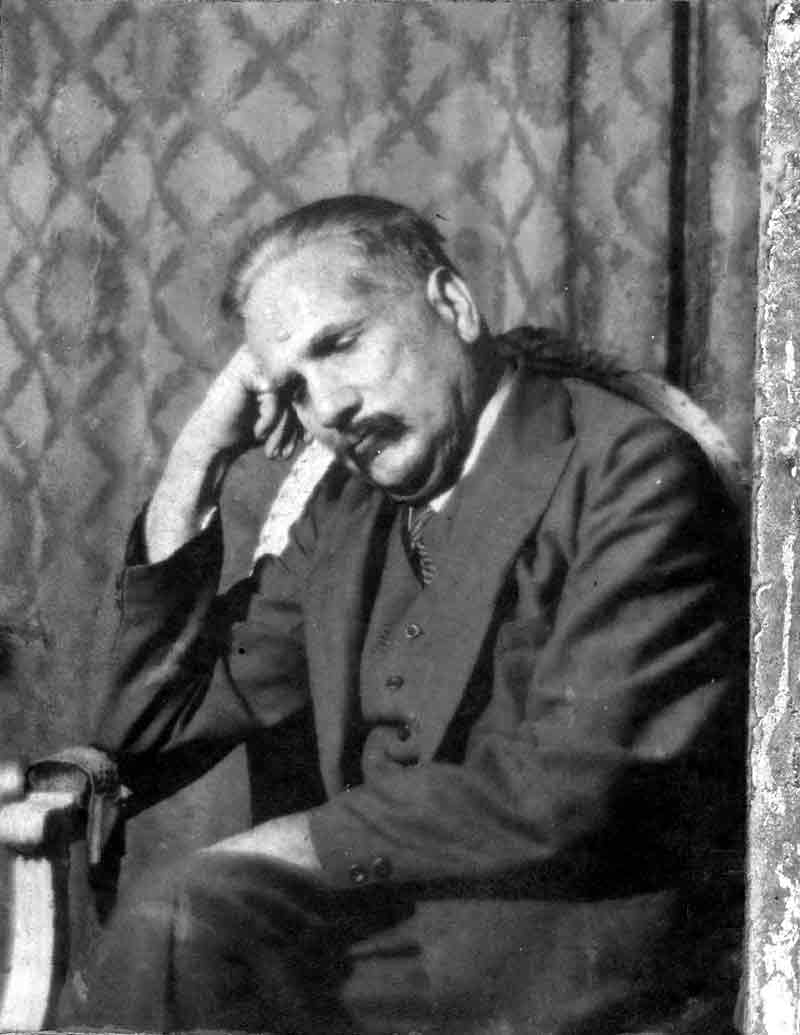
Allama Iqbal's Historic Address Sparks Movement for Separate Muslim State
Pakistan
Political
4 min read
Updated By: History Editorial Network (HEN)
Published:
In 1930, Allama Iqbal delivered his historic address in Allahabad, outlining the concept of a separate Muslim state in the Indian subcontinent. Iqbal, a prominent poet, philosopher, and politician, emphasized the distinct religious, cultural, and social identity of Muslims in India. He envisioned a homeland where Muslims could freely practice their faith and uphold their values without facing marginalization or discrimination.
The Allahabad Address marked a turning point in the political landscape of colonial India. It galvanized the Muslim community, instilling a sense of unity and purpose in their struggle for self-determination. Iqbal's call for a separate state for Muslims laid the groundwork for the eventual creation of Pakistan.
The address resonated deeply with Muslims across the subcontinent, inspiring them to rally behind the demand for a separate Muslim nation. It fueled the momentum of the Pakistan movement, leading to the eventual establishment of Pakistan in 1947.
Iqbal's vision of an independent Muslim state provided a sense of hope and empowerment to millions of Muslims who had long felt marginalized in the Hindu-majority society. The Allahabad Address was a catalyst for mobilizing support for the idea of Pakistan among Muslims from all walks of life.
The impact of Allama Iqbal's Allahabad Address reverberates to this day, shaping the identity and trajectory of Pakistan as a nation founded on the principles of Islam and democracy. It stands as a testament to the power of ideas and the enduring legacy of visionary leaders who dare to dream of a better future for their people.
#AllamaIqbal #AllahabadAddress #PakistanMovement #MuslimIdentity

Explore the Life Moments of
 AI Twin