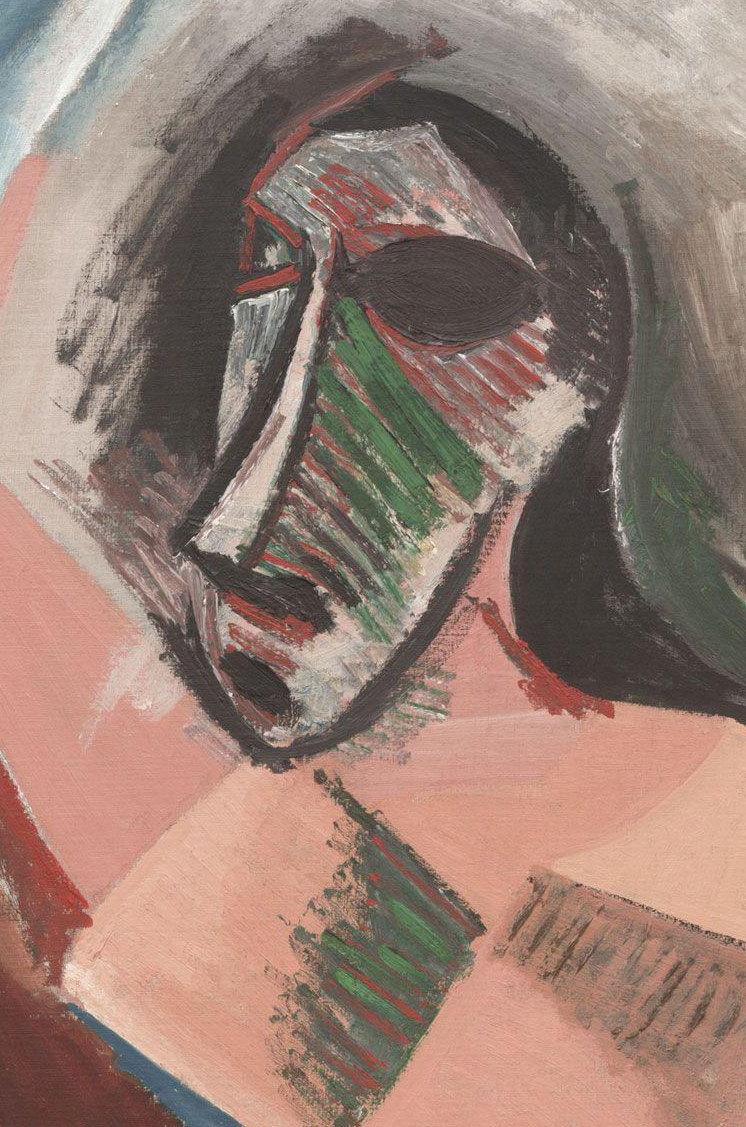
Picasso's "Les Demoiselles d'Avignon" revolutionized art through groundbreaking Cubist style and abstraction.
Spain
Art
Modern Art
4 min read
Updated By: History Editorial Network (HEN)
Published:
Pablo Picasso painted "Les Demoiselles d'Avignon" during a period of intense experimentation and exploration in art. This groundbreaking work marked a departure from traditional representation, ushering in a new era in modern art known as Cubism. The painting features five nude female figures with fragmented, geometric forms and mask-like faces, influenced by African and Iberian art. These stylistic choices challenged conventional perspectives and spatial representation.
Before this work, Picasso had been deeply immersed in primitivism and was inspired by Paul Cézanne’s abstract approach. "Les Demoiselles d'Avignon" was a reaction against the established norms of the art world, pushing the boundaries of what was considered acceptable in artistic depiction. The painting did not receive immediate praise; it was controversial, with some contemporaries deeming it ugly or disturbing.
The impact of "Les Demoiselles d'Avignon" was profound despite initial rejection. It laid the groundwork for Cubism, influencing numerous artists and art movements that followed. The fragmentation and abstraction in the painting became central aspects of visual art in the 20th century. Picasso's shift in technique and style opened doors for future artists to explore form, perspective, and abstraction in innovative ways.
Displayed today in the Museum of Modern Art in New York, "Les Demoiselles d'Avignon" remains a touchstone in art history, representing a critical juncture in Picasso’s career and the broader evolution of modern art.
#Picasso #Cubism #ModernArt #MoofLife #ArtHistory #LesDemoisellesDAvignon
Primary Reference
Pablo Picasso. Les Demoiselles d'Avignon. Paris, June-July 1907 ...
Explore the Life Moments of
 AI Twin