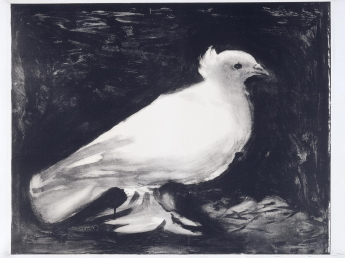
Picasso's Dove: Symbol of Peace and Political Activism
Spain
Political
Art
4 min read
Updated By: History Editorial Network (HEN)
Published:
Pablo Picasso, renowned for his groundbreaking contributions to modern art, created an image of a dove that became emblematic of peace and political ideology. This gesture was not an isolated artistic act but rather part of a larger socio-political context. Picasso's dove was selected as the emblem for the inaugural World Peace Congress, organized by the World Peace Council. This council was formed with the aim of promoting global peace in the aftermath of the second World War. The dove symbolizes a yearning for peace amid widespread geopolitical tensions and the onset of the Cold War, highlighting the artist's commitment to advocating for social and political causes through his work.
The impact of the dove extended beyond its initial purpose, becoming a universal symbol of peace. It was used in various forms of propaganda that promoted communist ideals, emphasizing solidarity and opposition to war. This artwork, therefore, was not just a visual contribution but a potent political statement that resonated on a global scale. Reports and records indicate that the simple yet powerful image of the dove was reproduced extensively, appearing on posters, banners, and publications worldwide.
Engagement with the dove symbol reflected the broad reach and influence of both Picasso as an artist and the political messages he supported. It encapsulated an era where art functioned as a pivotal medium for political communication and mass mobilization. Picasso's involvement and his iconic dove underscore the interconnectedness of art, ideology, and social movements during the mid-20th century.
#Picasso #WorldPeaceCouncil #DoveSymbol #ArtAndPolitics #Communism #GlobalPeace #MoofLife
Primary Reference
Peace symbols - Wikipedia
Explore the Life Moments of
 AI Twin