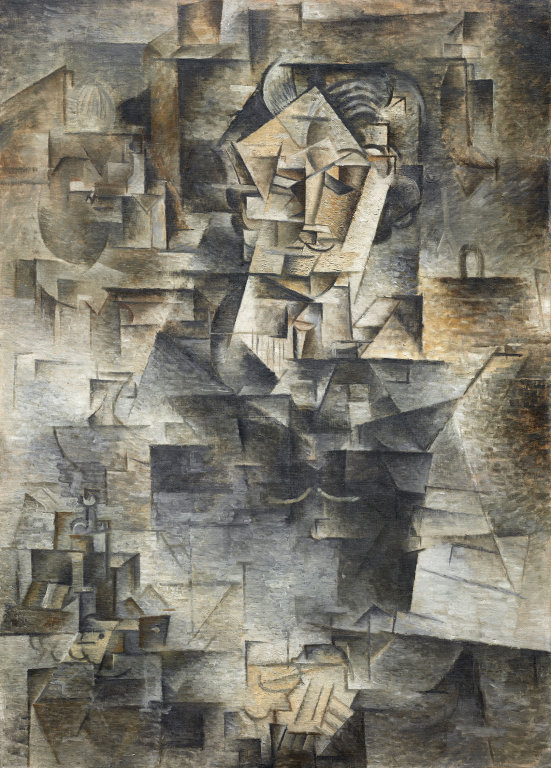
Picasso's Cubist Portrait of Kahnweiler: Artistic Collaboration and Historical Significance
Spain
Art
4 min read
Updated By: History Editorial Network (HEN)
Published:
In the early 20th century, an artistic collaboration took form between Pablo Picasso and influential art dealer Daniel-Henry Kahnweiler. During this period, Picasso created the "Portrait of Daniel-Henry Kahnweiler," a notable work now housed in the Art Institute of Chicago. This painting represents an intersection between Cubism's abstract representation and the profound impact of art dealers on the careers of avant-garde artists.
Kahnweiler, a promoter of Cubism, played a significant role in Picasso's career, providing both financial support and critical exposure. This particular portrait stands out due to its fragmented, multi-perspective depiction of Kahnweiler, a characteristic hallmark of Cubism. The intricate depiction was a reflection of Kahnweiler’s influence on shaping the modern art landscape.
The painting utilizes geometric shapes to convey the complexities of Kahnweiler's personality and profession. Breaking from traditional portraiture, it challenged viewers’ perceptions and invited engagement with the abstract. This artistic approach generated both interest and controversy within the art community, while also marking a transition in Picasso's evolving style.
Today, the "Portrait of Daniel-Henry Kahnweiler" is recognized not only for its technical composition but also for its historical significance within Picasso’s body of work and its influence on the Cubist movement. The association between Picasso and Kahnweiler illustrates the critical interplay between artists and patrons in the development of modern art.
#Cubism #ArtHistory #PabloPicasso #DanielHenryKahnweiler #ArtInstituteOfChicago #ModernArt #MoofLife
Primary Reference
Daniel-Henry Kahnweiler | The Art Institute of Chicago
Explore the Life Moments of
 AI Twin