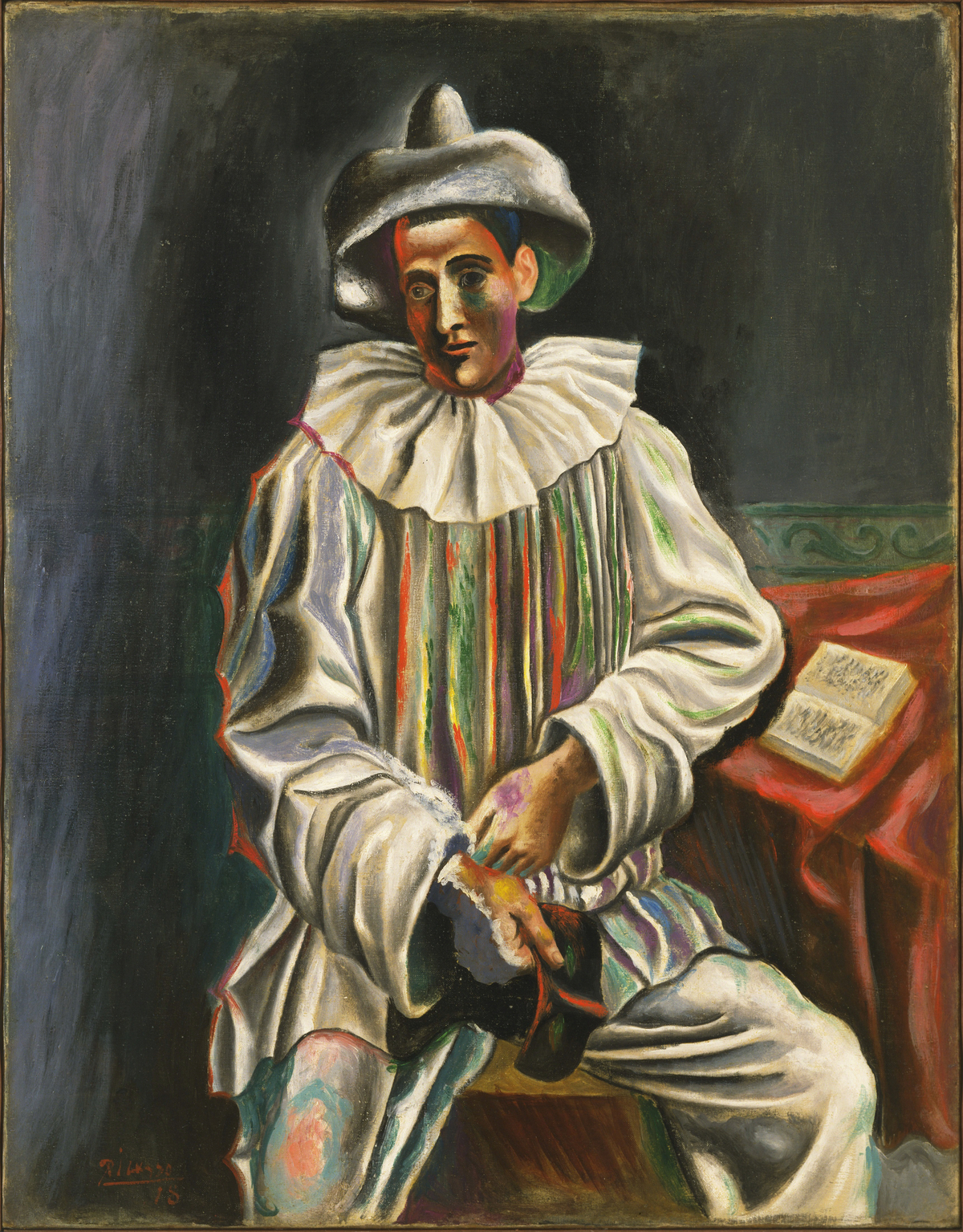
Picasso's "Created Pierrot" at MoMA: Symbol of Transition and Evolution
Spain
Art
Entertainment
4 min read
Updated By: History Editorial Network (HEN)
Published:
Pablo Picasso, a leading figure in the art world, completed the piece titled "Created Pierrot, oil on canvas" during a period marked by experimentation and transition in his career. This notable artwork is housed in the Museum of Modern Art in New York. By this time, Picasso was delving into his Neoclassical phase, having recently moved on from the abstract and fragmented forms of Cubism.
The painting, "Created Pierrot," showcases the character of Pierrot, a traditional figure from the Commedia dell'arte, translated through Picasso's evolving style that combined rigorous classical techniques with his unique, abstract approach. This artwork drew significant attention, marking a departure from his earlier Cubist works and signaling a return to figurative representation. The creation process represented a confluence of personal and artistic growth for Picasso, indicative of the broader cultural and artistic shifts occurring worldwide.
Statistically, the Museum of Modern Art's acquisition of this piece added to its impressive collection of modern masterpieces, solidifying its reputation as a premier institution showcasing 20th-century art. Picasso's contributions to the museum's collection helped in drawing hundreds of thousands of visitors annually, keen to witness the evolution of one of the most influential artists of the century.
"Created Pierrot" played a significant role in art history, reflecting the complexity of Picasso’s genius and the diverse phases of his artistic expression. Its presence at MoMA provides an essential insight into the transformative nature of artistic expression and the enduring appeal of Picasso’s work.
#Picasso #MoMA #ArtHistory #Neoclassicism #Cubism #Pierrot #ModernArt #CulturalShift #MoofLife
Primary Reference
File:Pablo Picasso, 1918, Pierrot, oil on canvas, 92.7 x 73 cm ...
Explore the Life Moments of
 AI Twin