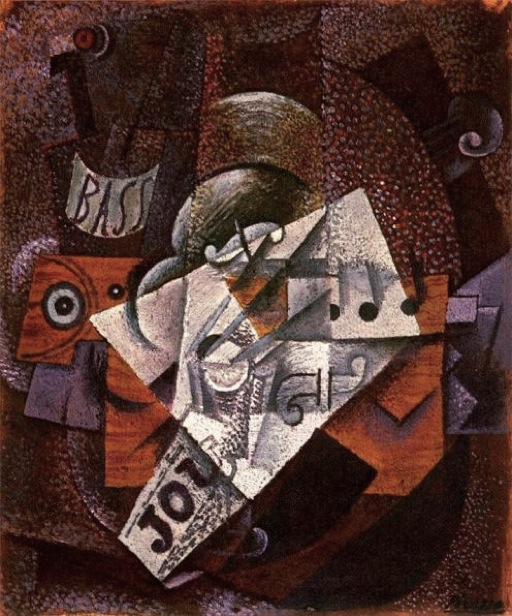
Picasso's "Bouteille, clarinet, violon" epitomizes cubism; artwork confiscated, challenging artistic norms in 20th century.
Spain
Art
Political
3 min read
Updated By: History Editorial Network (HEN)
Published:
Pablo Picasso, renowned for pioneering Cubism, created the work entitled "Bouteille, clarinet, violon, journal, verre" in the early 20th century. The piece exemplified his innovative approach to form and perspective, deconstructing objects into fragmented, abstract depictions. The artwork encompassed a bottle, clarinet, violin, a newspaper, and a glass, rendered in a manner that challenged conventional views of realism and perspective in art.
The French state confiscated the artwork several years after its creation. The confiscation occurred during a period marked by political and social upheaval, intersecting with concerns over avant-garde art defying traditional norms. Picasso, already a prominent figure in the Parisian art world, became a symbol of the modernist movement that was often met with resistance by conservative institutions. The state's action highlighted ongoing tensions between innovative artistic expressions and established cultural authorities.
The incident underscored the broader conflicts within the art community and society at large concerning the role and acceptance of modern art. Picasso’s work and its subsequent scrutiny played a substantial role in the shifting perceptions and eventual acceptance of modernist art forms.
This event is a key moment in understanding the evolution of modern art and its complex reception during times of social and political change.
#Cubism #ModernArt #PabloPicasso #ArtConfiscation #ArtHistory #MoofLife
Explore the Life Moments of
 AI Twin