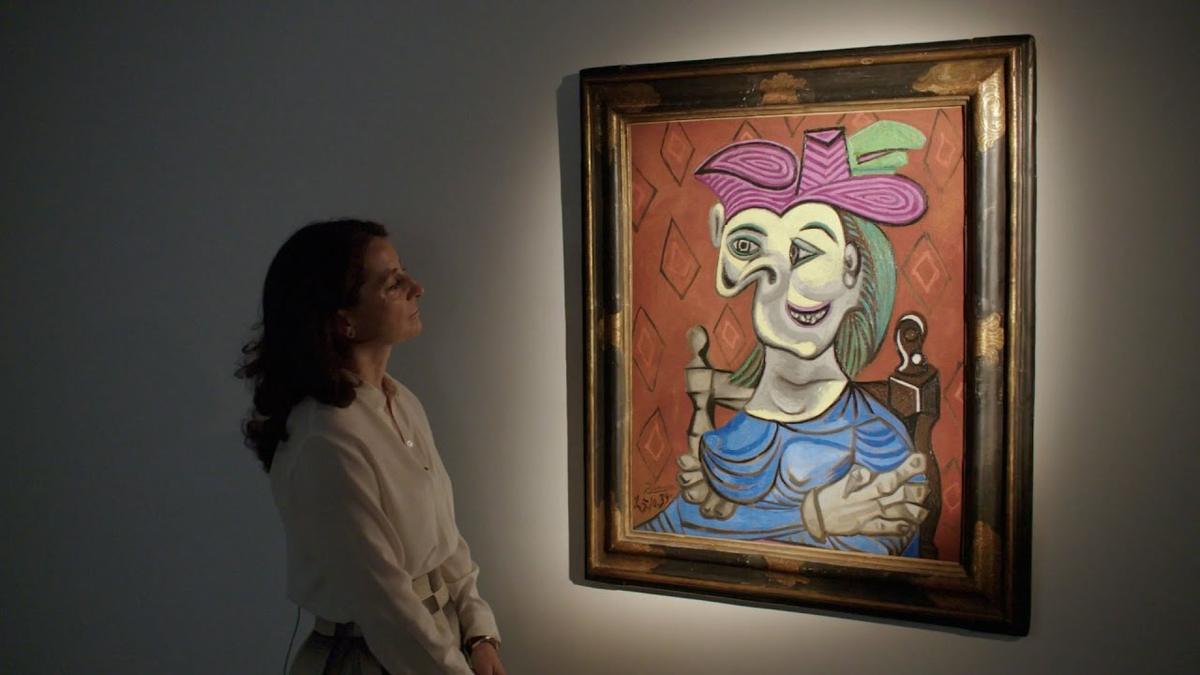
Pablo Picasso's "Femme assise, robe bleu": Artistic and historical significance in restitution debates.
Spain
Art
Global Trade
4 min read
Updated By: History Editorial Network (HEN)
Published:
Pablo Picasso's painting "Femme assise, robe bleu," completed in 1939, is a significant work not only in the artist's oeuvre but also in modern art history. This painting was misappropriated by the Nazis during World War II, exemplifying the widespread plunder of cultural assets across Europe during the conflict. For decades, the artwork's whereabouts were unknown, concealed amidst the chaos and displacement wrought by the war.
The painting was eventually recovered and became the subject of extensive legal and ethical debates regarding the restitution of art misappropriated during wartime. The recovery and subsequent sale of such works have been pivotal in broader discussions about restoring cultural heritage to rightful owners or their descendants.
This canvas, featuring a seated woman in a blue dress, was auctioned at Christie's for $45 million, a testament to its artistic value and historical significance. The sale underscored the market's recognition of the intertwined narratives of art and historical restitution. The auction drew attention to the importance of provenance research in verifying the legitimacy and history of valuable artworks, an increasingly vital practice in the art world.
The sale also highlighted how recovered artworks can serve as symbols of resilience and restitution, marking a resolution to a turbulent past. The painting, while celebrated for its artistic merit, now also represents a completed journey from misappropriation to rightful restitution and appreciation.
#Picasso #ArtRestitution #CulturalHeritage #WWIIArtTheft #ArtHistory #MoofLife
Primary Reference
Pablo Picasso - Wikipedia

Explore the Life Moments of
 AI Twin