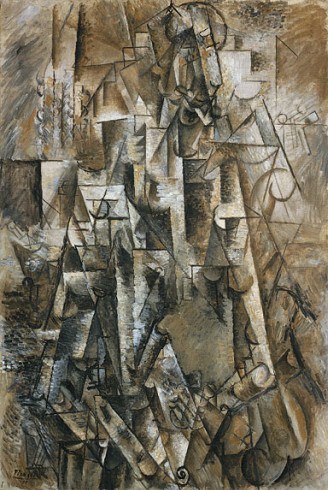
"Pablo Picasso's Cubist Masterpiece: Le Poète"
Spain
Art
Culture
4 min read
Updated By: History Editorial Network (HEN)
Published:
Painted "Le poète (The Poet)", now part of the Peggy Guggenheim Collection in Venice, is a work by the renowned artist Pablo Picasso. During Picasso's Cubist period, he focused on deconstructing subjects into geometric forms, reflecting multiple perspectives simultaneously. This painting is an example of that innovative technique.
"Le poète" embodies the Cubist philosophy, emphasizing abstract forms rather than realistic representation. It captures the shifting views and fragmented reality Picasso is known for. By breaking down the poet into intersecting planes and facets, Picasso aimed to convey more than what can be seen from a single viewpoint.
Cubism, co-founded by Picasso and Georges Braque, represented a critical shift in modern art, influencing various art movements such as Futurism and Constructivism. While working on "Le poète", Picasso engaged with themes of perception and representation. This painting exemplifies these thematic concerns by challenging traditional notions of perspective and form.
The artwork is composed of muted tones and explores the interplay between light and shadow, further disrupting the viewer's expectations of depth and dimension. It stands as a seminal piece in understanding both Picasso's development as an artist and the evolution of modernist aesthetics.
For art historians and those studying the evolution of early 20th-century art, "Le poète" serves as a pivotal example of Cubism's impact on how artists and audiences conceptualize visual experiences. Through its presence in the Peggy Guggenheim Collection, it continues to educate and inspire new generations, highlighting the enduring legacy of Picasso's work.
#Cubism #PabloPicasso #ModernArt #PeggyGuggenheimCollection #ArtHistory #MoofLife
Primary Reference
Peggy Guggenheim Collection - Wikipedia
Explore the Life Moments of
 AI Twin