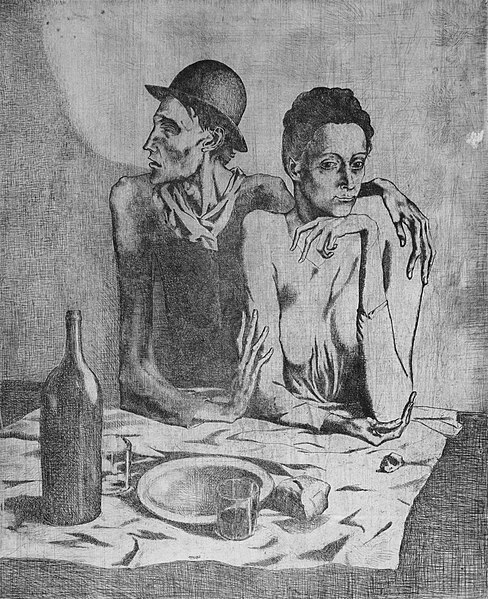
Picasso's "The Frugal Repast": A poignant reflection of poverty and human suffering in art.
Spain
Art Social Commentary
4 min read
Updated By: History Editorial Network (HEN)
Published:
In the early 20th century, Pablo Picasso produced an etching titled "The Frugal Repast." The etching, which depicts a blind man and a sighted woman, reflects the themes prevalent during Picasso's Blue Period. During this phase of his career, Picasso's work often conveyed the hardships and melancholy of the human condition, likely influenced by the poverty he witnessed around him and his own struggles at the time.
"The Frugal Repast" stands out as a powerful expression of these themes. The blind man and sighted woman sit together, sharing a simple meal which underscores the themes of poverty and human suffering. The contrast between the two figures, one deprived of sight and the other with the ability to see, adds a layer of complexity to the piece, emphasizing their shared plight despite their different circumstances.
This etching is not only significant in understanding Picasso's artistic evolution but also highlights the social realities of the time. It has been examined and appreciated for its emotional depth and technical skill. Art historians and critics often discuss it as a pivotal work that contributed to Picasso’s evolving style and the narrative of his Blue Period.
Today, "The Frugal Repast" is studied for its historical and artistic relevance, often showcased in discussions and exhibitions of Picasso’s early works. The etching continues to evoke discussions on human suffering, resilience, and the stark realities of poverty.
#Picasso #BluePeriod #ArtHistory #SocialRealism #MoofLife
Primary Reference
Picasso's Blue Period - Wikipedia

Explore the Life Moments of
 AI Twin