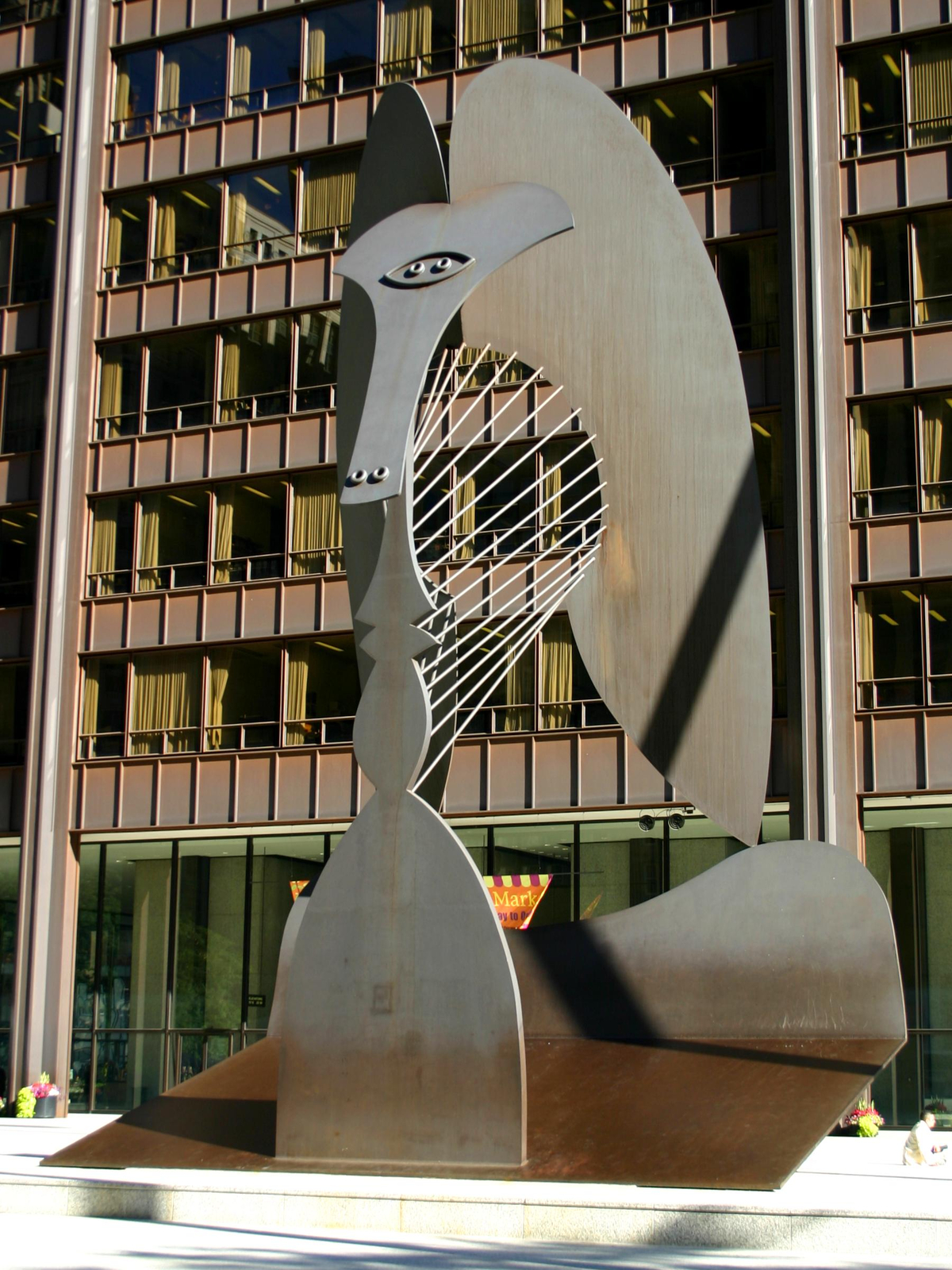
Chicago Picasso: Monumental Cubist Sculpture Redefining Public Art in 1967'
Spain
Art
4 min read
Updated By: History Editorial Network (HEN)
Published:
In 1967, Chicago witnessed the unveiling of a monumental public artwork, a 50-foot Cubist sculpture created by the renowned Spanish artist Pablo Picasso. This sculpture, referred to simply as the 'Chicago Picasso,' was a generous donation by Picasso to the city. Standing prominently in Daley Plaza, it became an instant landmark and symbol for Chicago.
Commissioned by C.F. Murphy Associates, the architects of the Richard J. Daley Center, in collaboration with William Hartmann of the architectural firm Skidmore, Owings & Merrill, the project was part of a larger urban renewal effort. The goal was to bring modern art to public spaces, making it accessible to the masses. The structure itself was made from Cor-Ten steel, a material chosen for its weather-resistant properties, starkly contrasting the surrounding buildings and contributing to its distinctive presence.
When the sculpture was unveiled, it sparked considerable debate. Reactions ranged from confusion and skepticism to admiration and awe. The abstract nature of the sculpture left much to interpretation, with some critics suggesting it resembled an animal or a mythical creature. Nonetheless, it signified a bold departure from traditional stylings and firmly established Picasso's legacy in the Americas.
The impact of the 'Chicago Picasso' was profound. It heralded a new era for public art in the city and influenced future commissions and city planning. The sculpture has since become an iconic image, embedded in Chicago's cultural and architectural identity. Not just a piece of art, it represents a critical juncture in the acceptance and appreciation of modern art within urban public spaces.
#ChicagoPicasso #PublicArt #Picasso #UrbanRenewal #ModernArt #ChicagoLandmarks #MoofLife
Primary Reference
Chicago Picasso - Wikipedia
Explore the Life Moments of
 AI Twin