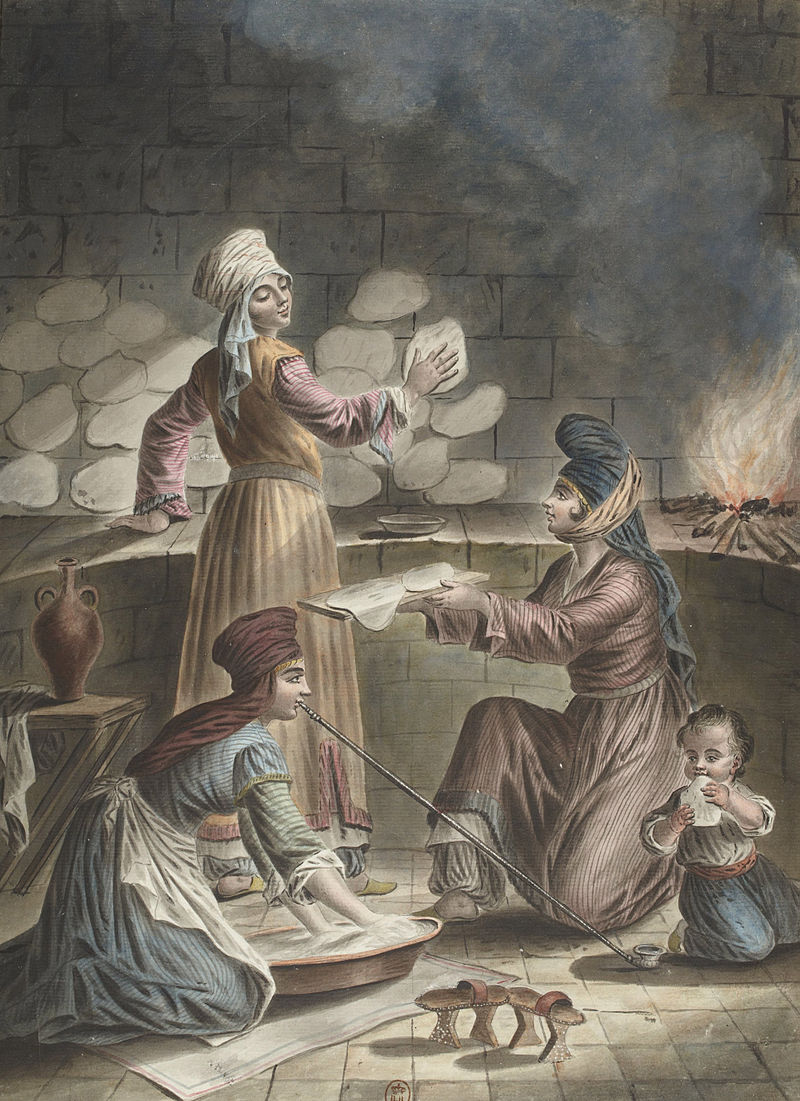
Turkish Women and Their Bread Baking Tradition
Turkey
Culture
Food
Tradition
4 min read
Updated By: History Editorial Network (HEN)
Published:
Updated:
The tradition of bread baking among Turkish women has deep roots in the cultural practices of the Ottoman Empire. This tradition was influenced by the shared Ottoman cuisine, which included various regional specialties and cooking methods. The kitchens of the Ottoman Palace played a significant role in shaping culinary practices, as they filtered down to the general population through events such as Ramadan and the cooking at the Yalıs of the Pashas. These practices not only provided sustenance but also fostered community and family bonding, as bread is a staple food in Turkish culture. The act of baking bread was often a communal activity, where women would gather to prepare and share their baked goods, reinforcing social ties and cultural identity.
The depiction of Turkish women baking bread in historical contexts highlights the importance of this tradition in daily life. Bread baking was not merely a household chore; it was an art form that required skill and knowledge passed down through generations. The process involved selecting the right ingredients, kneading the dough, and baking it in traditional ovens, which were often communal. This practice has had a lasting impact on Turkish cuisine and continues to be a vital part of cultural heritage. Today, bread remains a central element of Turkish meals, symbolizing hospitality and community. The tradition of bread baking among Turkish women reflects broader themes of resilience and cultural continuity, showcasing how food practices can preserve identity and foster connections across generations.
#mooflife
#MomentOfLife
#TurkishWomen
#BreadBaking
#OttomanEmpire
#CulinaryTradition
#CulturalHeritage
Primary Reference
Culture of the Ottoman Empire

Explore the Life Moments of
 AI Twin