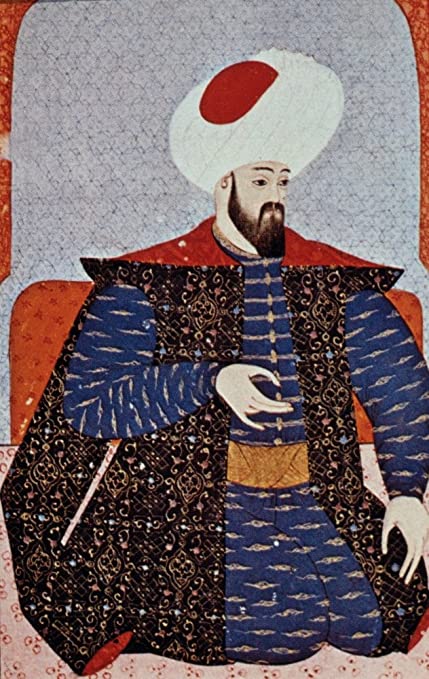
Foundation of the Ottoman Empire
Turkey
Empires
Ottoman Studies
4 min read
Updated By: History Editorial Network (HEN)
Published:
Updated:
The Ottoman Empire originated from a small principality known as a beylik, established in northwestern Anatolia by Osman I. This early state was formed during a period of fragmentation in the region, where various Turkish tribes were vying for control. Osman I, a Turkoman tribal leader, played a crucial role in unifying these tribes under his leadership, which laid the groundwork for the future expansion of the empire. The strategic location of the beylik allowed it to serve as a bridge between Europe and Asia, facilitating trade and cultural exchange. Over the following centuries, the empire expanded significantly, incorporating vast territories across southeastern Europe, western Asia, and northern Africa. This expansion was marked by military conquests, diplomatic marriages, and the assimilation of diverse cultures and peoples into the empire's framework.
The impact of the Ottoman Empire was profound, as it became a dominant political and military force in the region. At its height, the empire controlled key trade routes and cities, which contributed to its economic prosperity. The Ottomans implemented a sophisticated administrative system that allowed for effective governance over diverse populations. They also made significant contributions to art, architecture, and science, with notable achievements such as the construction of grand mosques and the development of a rich cultural heritage. The empire's legal and educational systems influenced many regions, and its legacy continues to be felt in modern-day Turkey and the Balkans. The Ottoman Empire's foundation marked the beginning of a complex historical narrative that shaped the geopolitical landscape of Europe and the Middle East for centuries.
#mooflife
#MomentOfLife
#OttomanEmpire
#OsmanI
#Anatolia
#HistoricalEmpires
#TurkomanTribes
Primary Reference
Osman I

Explore the Life Moments of
 AI Twin