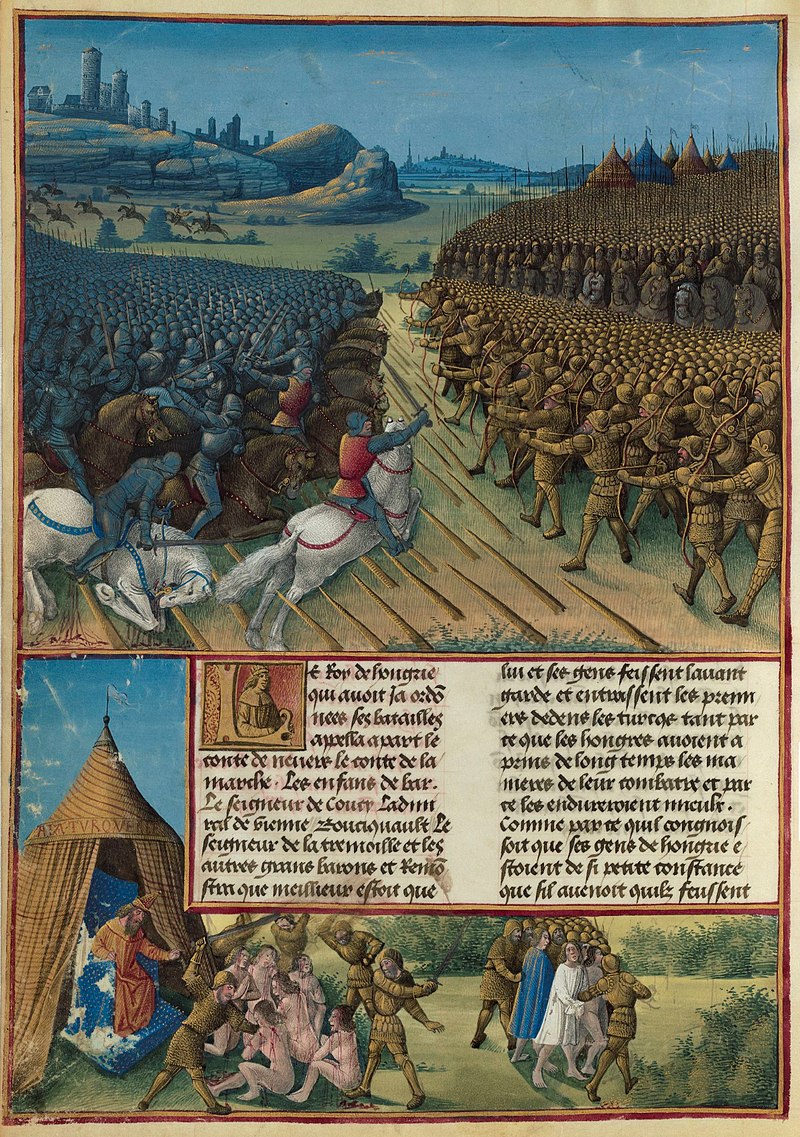
Battle of Nicopolis Overview
Turkey
Military
Bulgarian Tsardom
4 min read
Updated By: History Editorial Network (HEN)
Published:
Updated:
The Battle of Nicopolis was a pivotal conflict that took place in 1396, marking a significant event in the struggle between Christian Europe and the expanding Ottoman Empire. This battle is often recognized as the last large-scale crusade of the Middle Ages, involving a coalition of European forces primarily aimed at halting Ottoman expansion into Europe. The coalition was composed of various European states, including Hungary, France, and the Papal States, who sought to defend the remnants of Christian territories in the Balkans. The Bulgarian Tsardom of Vidin played a crucial role in this conflict, as the battle was fought on its territory. Despite the combined efforts of the European forces, the Ottomans, led by Sultan Bayezid I, emerged victorious, further solidifying their control over the region and paving the way for future conquests in Europe.
The impact of the Battle of Nicopolis was profound, as it not only demonstrated the military prowess of the Ottoman Empire but also highlighted the disunity among European states in the face of a common threat. The defeat at Nicopolis effectively marked the decline of organized resistance against Ottoman expansion in the Balkans. Following this battle, the Ottomans continued their advance into Europe, leading to the eventual fall of Constantinople and the establishment of Ottoman dominance in the region. The battle is often viewed as a turning point that signaled the end of the medieval crusading spirit and the beginning of a new era of Ottoman influence in Southeastern Europe. The consequences of this battle were felt for centuries, as it set the stage for the Ottoman Empire's expansion and the subsequent geopolitical landscape of Europe.
#mooflife
#MomentOfLife
#BattleOfNicopolis
#OttomanEmpire
#EuropeanCrusades
#BulgarianTsardom
#MedievalHistory
Primary Reference
Battle of Nicopolis

Explore the Life Moments of
 AI Twin