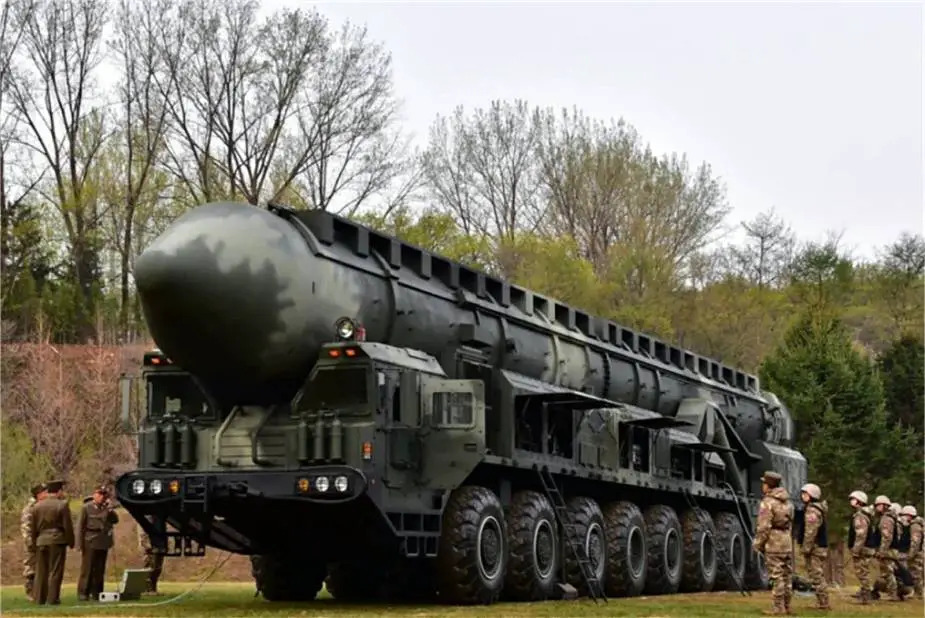
North Korea's Advancements in Solid-Fuel ICBM Technology
North Korea
Political
4 min read
Updated By: History Editorial Network (HEN)
Published:
Updated:
North Korea has successfully launched a new solid-fuel intercontinental ballistic missile (ICBM), marking an important step in its missile technology advancements. Solid-fuel ICBMs are more rapid in deployment compared to their liquid-fueled counterparts, due to the quicker launch preparation times required. This development implies enhanced readiness and potential for surprise attacks, boosting North Korea's strategic strike capabilities.
The missile test was conducted at a dedicated site, supervised by North Korean officials and covered extensively by state media. It achieved predetermined flight parameters and trajectory, signifying operational functionality. International observers note that this test showcases technological progress in ballistic missile capabilities, potentially increasing the range and payload capacity.
This launch follows North Korea's pattern of progressive missile development, continually challenging global non-proliferation efforts. Such advancements pose strategic concerns for neighboring countries and escalate regional security dynamics. The successful deployment of a solid-fuel ICBM could result in adjustments to defense postures and trigger diplomatic responses aimed at curbing further missile development.
The international community, including entities like the United Nations, has focused on monitoring these missile tests. Past sanctions have aimed to restrict North Korea's missile and nuclear programs, yet the continued technological achievements indicate persistent development efforts.
#NorthKorea #MissileTechnology #ICBM #SolidFuel #GlobalSecurity #DefenseStrategy #MoofLife
Primary Reference
Enabling Russian Missile Strikes Against Ukraine

Explore the Life Moments of
 AI Twin