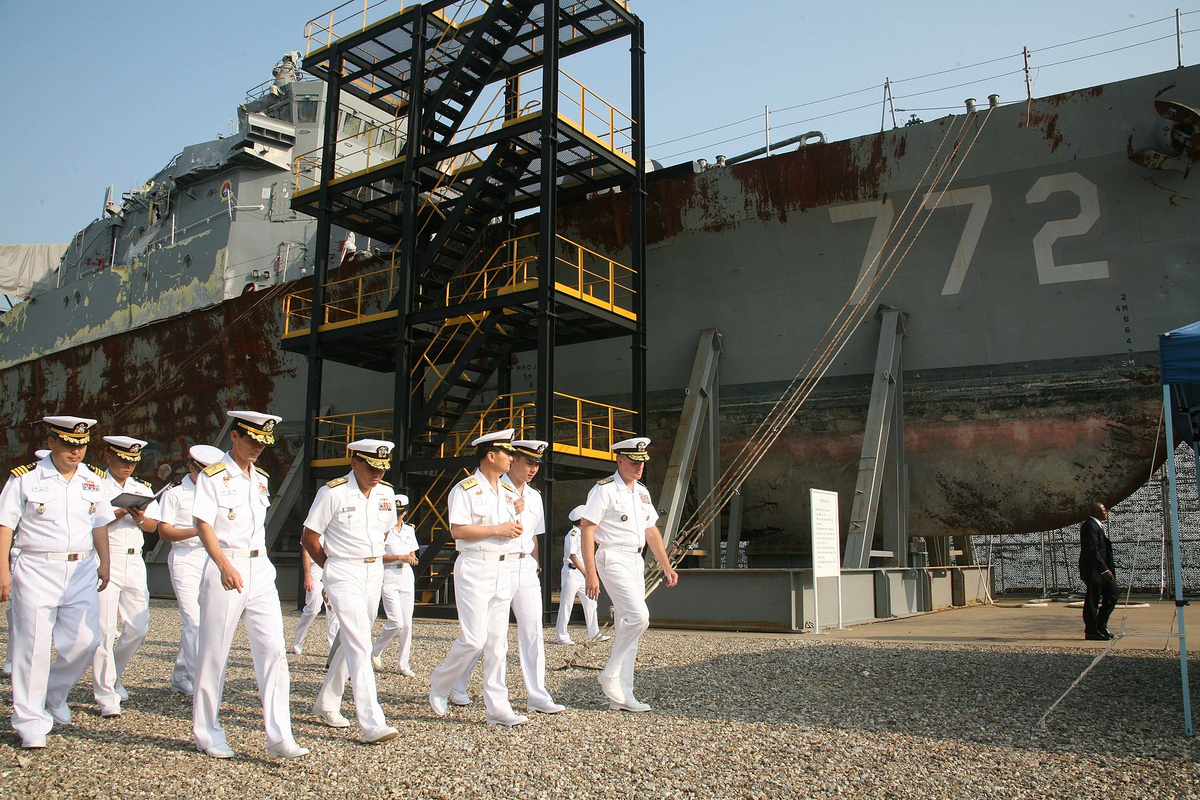
North Korea Sinks South Korean Warship Cheonan
North Korea

Military
NavalAttack
Tension
Conflict
4 min read
Updated By: History Editorial Network (HEN)
Published:
On March 26, 2010, the South Korean warship ROKS Cheonan was sunk near the disputed maritime border with North Korea, resulting in the deaths of 46 South Korean sailors. The 1,200-ton corvette broke in half and sank in the Yellow Sea, near Baengnyeong Island, an area that had been a frequent flashpoint for naval clashes between the two Koreas.
An international investigation, led by South Korea and supported by experts from the United States, the United Kingdom, Australia, and Sweden, concluded that the Cheonan had been struck by a torpedo fired from a North Korean submarine. The investigation cited evidence such as torpedo fragments, explosion patterns, and propulsion parts recovered from the site. The North Korean-made torpedo was identified as belonging to Pyongyang’s arsenal. Despite this, North Korea denied any involvement, calling the accusations fabricated and a provocation aimed at escalating tensions.
The attack led to severe diplomatic fallout between North and South Korea. In response, Seoul cut off nearly all trade and economic ties with Pyongyang and launched large-scale military drills with the United States. The United Nations condemned the attack, but due to China and Russia’s reluctance to explicitly blame North Korea, the Security Council’s official statement did not directly assign responsibility.
The Cheonan sinking was one of the deadliest military incidents between the two Koreas since the Korean War (1950-1953) and significantly escalated tensions. It was followed later that year by another provocation, when North Korea shelled South Korea’s Yeonpyeong Island in November 2010, killing two South Korean marines and two civilians. These events further strained inter-Korean relations and solidified North Korea’s reputation for unpredictable and aggressive military actions.
Explore the Life Moments of
 AI Twin