
Nobel Prize winners discover brain's navigation system, advancing neuroscience and cognitive understanding.
Sweden
Science
Medicine
3 min read
Updated By: History Editorial Network (HEN)
Published:
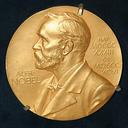
John O’Keefe, May-Britt Moser, and Edvard I. Moser were awarded the Nobel Prize in Physiology or Medicine for their groundbreaking work in neuroscience. Their research focused on the brain's spatial navigation system. John O’Keefe began this area of study by discovering place cells in the hippocampus. These cells activated when a rat was in a specific location, suggesting an internal map system. Following this, May-Britt and Edvard I. Moser identified grid cells, which function like a coordinate system, enabling precise navigation.
These findings significantly advanced understanding of cognitive functions and memory. O’Keefe's and the Mosers' discoveries provided evidence of how the brain represents space, connecting this knowledge to neural networks and higher cognitive processes. The research opened new directions in studying diseases like Alzheimer’s, where navigation abilities are often compromised. Their work utilized sophisticated techniques and long-term observations, greatly enhancing the knowledge of brain functionalities and spurring further inquiry into neurological and behavioral sciences.
#BrainResearch #Neuroscience #NobelPrize #NavigationSystem #MoofLife
Explore the Life Moments of
 AI Twin