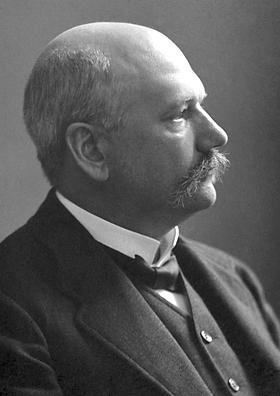
Albrecht Kossel: Nobel laureate advancing cell chemistry, proteins, and nucleic substances.
Sweden
Science
Research
4 min read
Updated By: History Editorial Network (HEN)
Published:
Albrecht Kossel, a German biochemist, received recognition from the Nobel Committee for his groundbreaking work on cell chemistry. Kossel's research made substantial contributions to the understanding of proteins and nucleic substances, laying the foundation for modern biochemistry and molecular genetics. By isolating and identifying the five organic compounds—adenine, cytosine, guanine, thymine, and uracil—Kossel provided essential insights into the chemical nature of nucleic acids. These findings were pivotal in the exploration of genetic materials and their role in heredity, influencing future research that would eventually lead to the discovery of the DNA double-helix structure.
Kossel's work also contributed to the comprehension of protein structures, emphasizing the importance of amino acids as the building blocks of proteins. This was crucial for further investigations into how proteins function in biological systems, including enzyme activity, cellular structures, and signaling pathways.
During his career, Kossel published numerous papers and mentored several prominent scientists, furthering the reach of his discoveries. His methods and results enabled subsequent generations to explore cell biology with greater precision and deeper insights, thus driving advancements in medical and genetic research.
The broader implications of Kossel's work extend to various fields such as genetic engineering, biotechnology, and medical diagnostics. By establishing fundamental principles of biochemistry, he set a precedent for the ongoing quest to decode the mechanisms of life at a molecular level.
#NobelPrize #CellChemistry #Proteins #NucleicAcids #Biochemistry #Genetics #MedicalResearch #InnovativeScience #MoofLife
Primary Reference
Award ceremony speech - NobelPrize.org
Explore the Life Moments of
 AI Twin